

Unreliable narrators – Why they’re great tools for critical thinking
Unreliable narrators can be a barrel of laughs, but they’re also great tools for critical thinking, says Bethany Walker…

- by Bethany Walker
- Children’s author and former teacher and educator in museums and galleries Visit website
An unreliable narrator is a character who tells a story, but cannot be fully trusted to tell it accurately or truthfully. This may be because they are mistaken, forgetful, biased, or even deliberately lying.
The narrator might misunderstand the world around them, or tell an outrageous version of events that readers are invited to question.
In children’s fiction, unreliable narrators can create humour, mystery, or surprising twists that help young readers think more critically about stories.
Why do children love unreliable narrators?
As a children’s author, I love writing funny stories, and I particularly love epistolary – also known as diary-style – books.
One of the main pleasures of stories in these formats is that the protagonists easily get the wrong end of the stick. The viewpoint character may completely believe what they are writing, but the child reader loves spotting where that character is deviating from the truth.
The humour we can get out of these situations, plus the joy children experience from being one (or many) steps ahead of the book, are two very good reasons why stories with unreliable narrators are fantastic for children.
What makes a narrator unreliable?
A narrator may be unreliable for several reasons:
- Lack of knowledge: They might be too young or inexperienced to understand what’s really happening.
- Bias: They could be trying to make themselves look better or make someone else look worse.
- Imagination: They might confuse fantasy with reality.
- Lying: They might deliberately tell untruths, either to deceive or for comic effect.
Books that include an unreliable narrator allow the reader to realise that all is not as it seems, thereby allowing them to feel like they’ve unlocked a special secret hidden within the text.
In this age of mass, unfiltered communication and information, children’s ability to spot an unreliable narrator, and understanding that they have to question what is written, are two skills that are becoming ever more vital.
Engaging pupils with books that employ an unreliable narrator actually helps prepare them for a lifetime of misinformation.
Books with unreliable narrators
The True Story of the 3 Little Pigs by Jon Scieszka
This book is a classic, but it stands the test of time as it encourages children to think about how stories can change depending on who tells them.
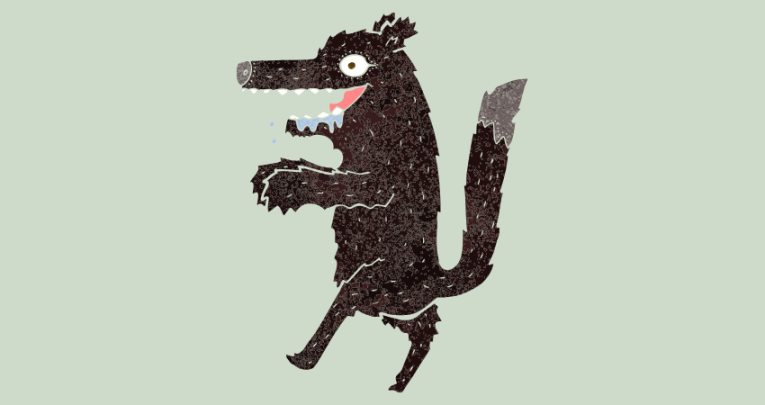
In this retelling of the fairy tale, the wolf (Alexander T. Wolf) claims he was only trying to borrow a cup of sugar from his neighbours, the pigs.
He insists the real story is a misunderstanding blown out of proportion by the media. Readers quickly realise that he’s bending the truth to make himself look innocent.
Loki: A Bad God’s Guide to Being Good by Louie Stowell
This series, starring the Norse god of mischief, Loki, is a fantastic spin on the idea of an unreliable narrator.
Loki’s entire personality is based around being untrustworthy and sly, yet as part of his way of learning to be better, he has to write a diary in which he can only tell the truth.
Through Louie Stowell’s hilarious writing, readers see the battle between Loki’s true nature and his attempts to tell the truth and achieve his goals.
This Is Not My Hat by Jon Klassen
In this darkly funny picture book, a small fish steals a hat and confidently tells readers why he’ll get away with it. His smug claims contrast with the illustrations, which reveal the truth: he’s being followed, and justice is coming.
The unreliable narration creates tension and humour as readers piece together what’s really happening.
Why are unreliable narrators good to teach?
Using unreliable narrators in the classroom helps children develop:
- Critical reading skills: They learn to compare what the narrator says with other clues.
- Empathy and perspective: They understand how people can see the same event differently.
- Creative thinking: They explore imaginative storytelling techniques.
Unreliable narrators invite children to question what they read with greater awareness – and it is also fantastic for children to bring unreliable narrators into their own writing.
By playing with this technique, pupils can learn simple ways to add humour and interest to their work, while also gaining a deeper understanding of storytelling, voice and perspective; skills that will benefit them both in literature and in life.
Unreliable narrator writing activities
I, monster
Choose a well-known story (e.g. The Minotaur or George and the Dragon) and retell it from the monster’s point of view.
What is the monster like? Did they mean to cause a problem? Are they misunderstood? Was it all a big mix-up?
Learning focus: Understanding point of view; using persuasive or biased language.
“It wasn’t my fault!”
Write a diary entry from a character who got into trouble – but claims they are innocent. Let the narrator make excuses or exaggerate. Then ask pupils to illustrate the ‘real’ events.
Learning focus: Identifying exaggeration and truth; using voice and character in writing.
Detective story
Write a mystery story where the detective makes lots of silly assumptions or misses obvious clues. Let the readers figure out what’s really going on.
Learning focus: Developing plot and inference; using humour and irony.
Two sides
In pairs, one pupil writes a story from one character’s perspective. Their partner writes the same event from another character’s point of view. Compare the two and discuss the differences.
Learning focus: Exploring bias; team writing and discussion.
Bethany Walker is an author of children’s books. Her latest book, Medusa Gorgon’s Bad Hair Day (£7.99, Scholastic), is out now.