

Geography and natural hazards – How should you frame them?
Steve Brace considers the framing at work when geography classes study ‘natural disasters’ – and why even the term itself is up for debate…

- by Steve Brace
- Chief executive of the Geographical Association
The study of natural hazards (popularly termed ‘natural disasters’), their impacts and people’s exposure to them has become a popular part of the geography curriculum.
Natural hazards case studies in geography might feature as:
- tectonic and flooding hazards in KS3
- extreme weather at GCSE
- more in-depth study of what can cause natural hazards at A Level
In connecting physical and human processes, natural hazards provide a context for better understanding how geographical processes are both interdependent with, and an influence on different areas locally and globally.
Choices and decisions
However, geography teachers will be mindful of the need to bring careful nuance to bear on how they teach about natural hazards – and particularly how and when a ‘hazard’ becomes a ‘disaster’.
Professor Kelman reminds us of this in his seminal work, Disasters by Choice. The book argues that it is the actions of humans, through people’s choices and decisions, that can turn a natural hazard into a catastrophe.
He observes that there is no such thing as a ‘natural disaster’. Rather, it is “Nature that produces phenomena – such as earthquakes and floods. But they are only hazardous because of human choices.”
He illustrates his argument by citing the hypothetical example of officials approving a housing development without earthquake proofing in an earthquake zone.
Were this to occur, would the resulting hazard be the fault of the earthquake? Or would it actually be the fault of the people who made the decision for the development to go ahead?
Variable risk
There is also spatial difference in how vulnerable different types of people will be to the risks presented by a natural hazard.
This might result in some people being harmed and their property damaged. Meanwhile, others might only experience low impact, despite comparable levels of risk.
Dr Martin Parham, a lecturer in disaster management, has argued that natural hazards are likely to have greater impacts for:
- poorer people
- those who might be displaced
- children under five
- disabled people
Factors that can help to reduce such vulnerabilities include:
- effective and working infrastructure
- access to healthcare
- water and sanitation
- disaster preparedness
- access to communications that can inform and warn people, support decision-making and facilitate responses by emergency services
Given the ready availability of social media and 24-hour news coverage nowadays, it might be tempting to believe that the world is constantly beset by an almost perpetual series of disasters.
A useful corrective to this mindset is the work of geography teacher David Alcock. His Hopeful Geographies approach highlights how you can explore positive progress in the classroom.
Elsewhere, Dr Hannah Ritchie, via her Our World in Data website, has shown that there has, in fact, been a steep fall in the number of fatalities resulting from such disasters over the last 100 years.
As she points out, “Deaths haven’t declined so steeply because disasters are becoming less frequent or intense. The main reason that fewer people are dying is that we’ve gotten better at protecting ourselves and each other.”
Bangladesh cyclone example
The way in which Bangladesh has reduced its exposure to cyclones further illustrates this positive trend. 50 years ago, more than 300,000 people were killed when a cyclone hit Bangladesh’s coast.
Cyclones continued to be responsible for high levels of fatalities into the 1980s and 1990s. But there was a markedly different impact when Cyclone Amphan struck Bangladesh’s coast in 2020.
This was a category 5 cyclone – the strongest type of cyclone, with wind speeds reaching 160mph/260kph in the Bay of Bengal. Yet the number of subsequent fatalities were far lower, with only 26 deaths recorded.
This reduction had been achieved through:
- the use of improved cyclone detection and early warning systems
- the construction of 12,000 shelters
- more effective community preparedness and response plans
- the successful evacuation of over 2 million people
Avoiding ‘single stories’
A further consideration for geography teachers is how their study of natural hazards might represent different locations around the world.
For example, it’s not uncommon for Haiti to feature only once on a geography scheme of work, and then only in relation to its experience of the 2010 earthquake.
This characterisation of places solely in relation to high-profile disasters runs the risk of leaving pupils with very partial views of certain countries.
Ofsted has picked up on this. It noted in its 2023 geography subject report that the tendency “was most common in schools where leaders had not considered the dangers of teaching single stories about places in their curriculum.”
Natural hazards in Britain
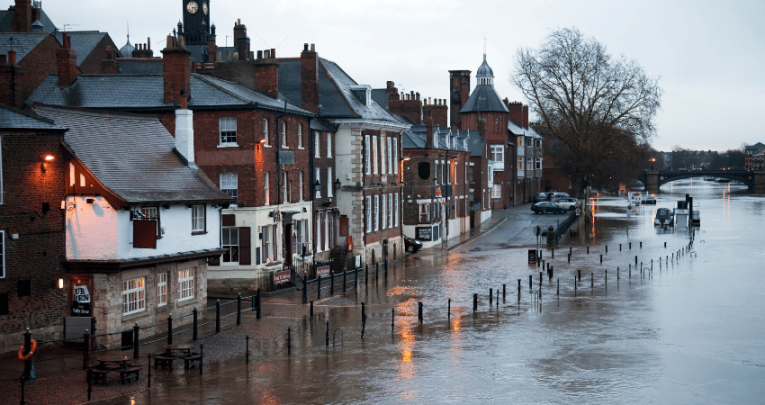
Nor should we be blind to misconceptions that might pertain to comparatively prosperous countries. For example, according to the government’s Environment Agency, 6.1 million British people currently live in areas that are exposed to flood risk. This amounts to roughly 10% of the country’s population.
Over the next 25 years, as a result of climate change, this is set to rise to 8 million people. At that point, one in four English properties will be located in areas of flood risk.
Yet when people are asked about this risk, many will discount their own direct exposure. When surveyed in 2023/24, around half of the respondents who were currently living in a flood risk area did not believe that flooding would happen to them.
Risk of natural hazards
Flooding is just one of the natural hazards to be found in the UK. An up-to-date overview of them all can be found in the National Risk Register.
This considers a range of natural and environmental hazards, including:
- wildfires
- volcanic eruptions
- earthquakes
- storms
- high temperatures and heatwaves
- low temperatures and snow
- flooding
- drought
- air quality
Each risk is analysed in terms of its likelihood and possible impact. The likelihood of an earthquake occurring in the UK, for instance, is low. Any that did would be unlikely to cause severe damage.
Conversely, the National Risk Register identifies air quality as “the largest environmental risk to UK public health and linked with reduced lifespans”.
To this, we can add peoples’ differing levels of vulnerability to such risks. As noted by Professor Danny Dorling, it’s predominately Black British children living in high-rise buildings on estates without greenery who will typically be exposed to the highest levels of air pollution.
Your pupils could therefore be studying natural hazards that affect populations in distant localities, or ones they may soon be faced with on their own doorsteps, such as local air quality or flood risk.
By exploring those issues of vulnerability, risk, human agency and progress, pupils can assess for themselves whether there really is anything ‘natural’ about a so-called ‘natural disaster’.
Steve Brace is chief executive of the Geographical Association.