

Significant individuals in history – Highlighting underserved voices
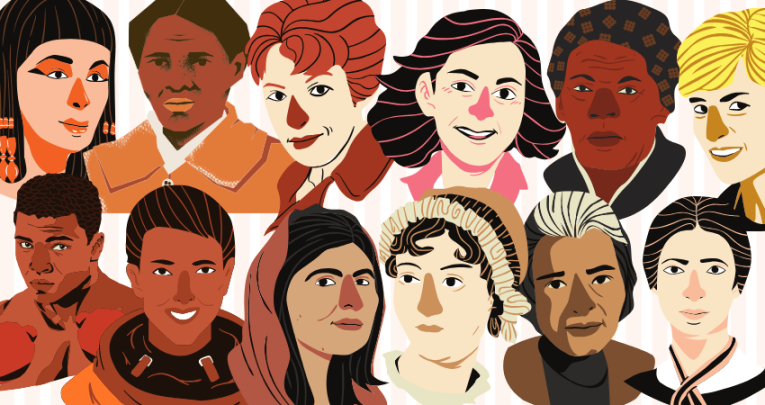
Highlighting underserved voices in history doesn’t mean wiping out the entire curriculum, but there are plenty of opportunities to expand…

- by Lindsey Rawes
- Chartered teacher of history for the Historical Association Visit website
If you could invite any significant individuals in history to a dinner party, who would it be? The usual suspects cropped up when I asked my Y5 class: Winston Churchill, Elizabeth I, Rosa Parks, Florence Nightingale.
These significant individuals – many of whom are taught at KS1 – are memorable for good reason. However, there is a vast spectrum of historical lives still overlooked in primary teaching, which offer rewarding opportunities, both in KS1 and beyond.
Not just for KS1
When building our school’s curriculum, we decided that we wanted pupils to have opportunities to encounter a diverse range of people from different cultures and backgrounds as part of their history learning.
The aim was to challenge societal ‘norms’ and enrich pupils’ knowledge by linking history with other subjects such as science, geography, art and music.
For example, the following significant individuals in history are just some of the people our pupils study during their journey through school:
- Rudolf Nureyev
- Betty Campbell
- Alan Turing
- Isabella Bird
- Hatshepsut
- Walter Tull
- Maria Telkes
These people are all carefully mapped across the curriculum. This approach means that, even during science or geography-driven topics, pupils are still engaging meaningfully with historical disciplinary knowledge.
These sessions are not just about children making a timeline of a person’s life or being able to recite facts about them.
By focusing on the concepts of significance, impact and legacy outlined in the national curriculum, they can apply their skills as historians and offer explanations for their answers.
“These sessions are not just about children making a timeline of a person’s life”
Children are better able to understand core historical vocabulary, reason why they think individuals were significant in history and discuss their impact, while being exposed to significant players in women’s, Black and Asian, and LGBTQ+ history.
This also aligns with the teaching of British values and protected characteristics as defined in the Equality Act.
Selecting significant individuals in history
You may be wondering how and where to select significant people in history. There are, of course, the usual big hitters. It’s important that we don’t get rid of these well-known names.
Just because an individual was a white, heterosexual male doesn’t mean they should be banished from the curriculum forever. There’s still merit in teaching pupils about Henry VIII and Winston Churchill.
However, we also have a chance to reframe traditional narratives. Were these people really great leaders? Do their reputations live up to scrutiny?
These are opportunities for pupils to examine a range of sources carefully and make up their own minds. It can also introduce older pupils to the concepts of perspective and propaganda.
“Just because an individual was a white, heterosexual male doesn’t mean they should be banished from the curriculum forever”
Choosing your significant individuals in history wisely also enables pupils to draw contrasts and make connections.
For example, pupils in my Y5 class argued that they thought Alan Turing was just as important as Winston Churchill during World War II, as he was responsible for cracking the Enigma Code.
Some even argued that he was more significant, as the war might have had a different outcome without him.
In Lower KS2, pupils were able to compare the lives of the pharaohs Tutankhamun and Hatshepsut. Looking at a less well-known figure alongside a more famous one means that children can ask and answer enquiry-led questions such as:
- ‘Who was the most significant?’
- ‘Whose legacy had the most impact?’
Less obvious choices also get pupils questioning their preconceptions about what they already know. For instance, studying Walter Tull during Remembrance Week got pupils in Y3 discussing the fact that soldiers in World War I came from different backgrounds. Life for Walter Tull and other Black officers might have been more difficult at that time than it would be now.
Resources about significant individuals in history
So, where to find out about these people? Much work has been done on individuals from Black History.
- David Olusoga’s picturebook version of Black and British is a fantastic resource for finding out about Black African people who built the history of our country.
- English Heritage has provided detailed information on famous Black Britons who have Blue Plaques dedicated to them.
- Lands of Belonging by Donna and Vikesh Amey Bhatt gives a good overview of South-East Asian history and its contribution to our culture.
- The Proud Trust offers teaching resources that provide a good starting point for incorporating significant LGBTQ+ individuals.
Local history
Your locality should also be incorporated into studying significant historical individuals, which helps to make the content relevant.
For example, in my school, children in KS1 study the iconic Florence Nightingale and Mary Seacole. However, they also look at Nellie Spindler, who lived in Wakefield.
In KS2, they examine the Ivory Bangle Lady from York. They also look at Sir Martin Frobisher: the last figure proved contentious when pupils discovered he was not just a hero of the Armada but was involved in the early slave trade and responsible for colonising an area of Canada, oppressing its indigenous people.
The Historical Association’s list of local significant individuals is an invaluable resource for this, split into lists of people by region.
Getting in touch with your local museum service can also throw up some great suggestions. There may even be an exhibition or a visitor who will ignite pupils’ learning.
Teaching approaches
Good history learning is not about long information texts or posters. Here are a couple of approaches that have worked well in my own classroom.
Diamond Nine grids
Pupils used Diamond Nine grids to rank given statements about a person and decide which was their most significant achievement.
The emphasis was very much on discussion and children were allowed to move statements into different parts of the grid, provided they could justify their opinions.
Significant Knockout
In Significance Knockout battles (where two individuals in the same field or period are compared) children studied two contrasting individuals and were split in teams to look at one in depth. They then argued why their individual was more significant.
Both these activities got pupils looking at source material, reasoning and provided lively and thoughtful discussion.
Teaching about significant individuals in history is not about pupils regurgitating dates and facts. It’s about pupil dialogue, reasoning and creating visibility for lesser-known narratives.
Children are our future communicators and changemakers. The disciplinary knowledge they gain studying these figures is not only history, but a foundation for the citizens they’re becoming.
Lindsey Rawes is a primary teacher and history lead. She is also a chartered teacher of history for the Historical Association.