
Character passport – Use them to encourage reading for pleasure
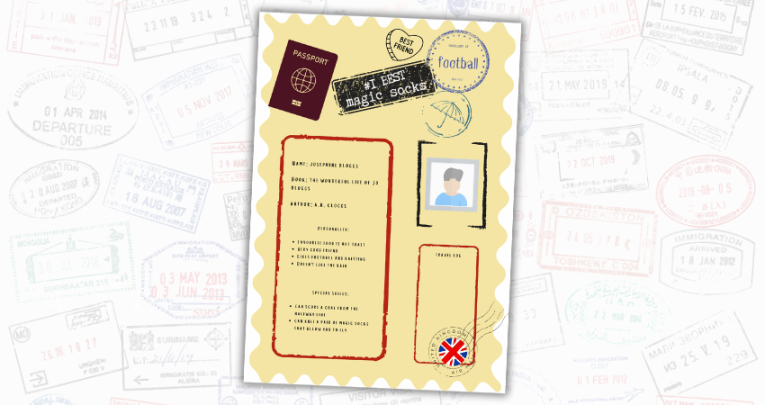
Create engaging ‘character passport’ activities that boost reading for pleasure, develop key literacy skills and help pupils build empathy and deeper comprehension…

- by Emily Azouelos
- Freelance writer and former primary school teacher and senior leader
This character passport activity blends children’s opinions on books and key interests with the literacy skills that are essential for learning across the rest of the curriculum…
Various studies have shown that fostering an early love of reading, and continuing to develop it throughout childhood, improves mental wellbeing as well as academic outcomes.
Creating fun and engaging ‘reading for pleasure’ activities in the classroom will help your pupils to develop deeper comprehension, richer vocabularies, and stronger empathy.
Character crate
As a starter, place a ‘character crate’ in the classroom. Encourage children to bring in books featuring characters they’ve enjoyed reading about. Alternatively, write down the names of the characters on pieces of paper.
You can support this by sharing your favourite (child-friendly!) books, or talking about stories you’ve shared in school.
Individually or as a class, gather words to describe the characters children have chosen. Sort them into ‘good’ and ‘bad’ lists. Encourage pupils to justify their ideas using evidence from the story where possible.
Good v bad
Working in groups, ask the children to choose one good and one bad character from a book or the character crate.
Produce role-on-the-wall drawings. These are large outlines drawn around a child’s body inside which pupils write personality-related adjectives, with evidence or quotes that help justify why their chosen character is the hero or villain in the story, on the outside.
Give time to share their work, look at each group’s drawing, and to add in ideas with sticky notes. Ask each child to select one character to focus on for their creative work later
Character passport
Now for the character passport. Get the children to sketch out a plan showing where information will go: a box for the character’s picture, a personality section, (perhaps including special skills, friends/enemies, etc), and a space for extras, such as a list of magical abilities, or secret missions.
This planning sheet should help them think about the organisation and layout of their character passport, and how to blend the facts they have discovered with imagination and inference
Add the visual elements of the character passports by choosing colours, borders, symbols, and illustrations that match each character’s personality.
For example, good characters might use bright tones, soft shades and symbols that convey light and goodness, whereas bad characters might have darker shades or bold shapes.
Encourage children to use the pictures in books to carry out research and look for inspiration.
Creating character passport booklets
Finally, using their plan and artwork, children will create a character passport booklet. Encourage them to use the following essential ingredients:
- The character’s name, including what book they feature in and the author of the book.
- A drawing of the character with their age (estimated if unknown), where they live and species (magical, human etc).
- Strengths and weaknesses.
- A list of allies and rivals of the character.
- Draw and design stamps that they think their character would have earned from their actions in the story (e.g. Bravery stamp, Trickster stamp or Friendship stamp).
- A creative writing section (e.g. a travel log where children can write the places their character has visited in the story).
Emily Azouelos is an experienced former primary teacher, and educational content creator.