
Pupil premium – Are we spending it wrong?

Every pound of pupil premium counts – but are schools investing in flashy extras or the strategies that truly help disadvantaged pupils succeed?

- by Teachwire
- Classroom expertise and free resources for teachers

Maximising the impact of pupil premium funding is a constant challenge – how can you ensure every pound makes a real difference to disadvantaged pupils?
In this blog we explore how you can make the most of pupil premium funding to drive meaningful impact in your setting.
Table of contents
Pupil premium mistakes to avoid
Former headteacher Lucy Coy highlights the practical, evidence-informed strategies that have the biggest impact on disadvantaged pupils…
It’s a familiar scene: the staffroom discussion about how to spend the school’s pupil premium pot. Everyone has ideas, from new laptops to hiring more teaching assistants.
Yet year after year, some schools struggle to see a real difference. Why? Often, it boils down to the biggest mistake in using pupil premium: spreading it too thinly across ad hoc initiatives instead of zeroing in on what truly drives progress.
Don’t dismiss the basics
“Maybe we start with the basics – like breakfast?” one teacher suggests, half-joking. In fact, they’re onto something.
Research shows that free breakfast clubs improve punctuality and behaviour, especially for persistently late pupils.
Many schools that introduced a universal breakfast club found that children who had always rolled in after the bell began arriving on time.
Headteachers reported that classrooms were calmer, and teachers noticed pupils settled down to learn more quickly. Even those who didn’t attend directly benefited from a smoother start to the school day.
It’s not glamorous. However, ensuring that children start the morning fed and calm is one of the simplest ways to use pupil premium effectively. It makes them more ready to learn – and that’s half the battle won before the first lesson begins.
Don’t be distracted by shiny extras
Another voice chimes in: “What about a new reading programme? Or more technology?” Tempting, but research is clear that the biggest lever for improving outcomes is the quality of teaching.
The Education Endowment Foundation (EEF) and the Department for Education both emphasise that the best use of pupil premium is often to invest in staff development.
When teachers improve their practice, disadvantaged pupils gain the most. Whether it’s training staff in phonics, improving feedback or developing strategies for metacognition, professional development has a multiplier effect.
The shiny extras can wait – what really counts is giving staff the tools to teach even better.
Beware the scattergun approach
Reports from both the National Audit Office and Ofsted have warned that schools sometimes spread their pupil premium funding so thinly that no single initiative makes a real difference.
In some cases, schools spend money indiscriminately on general staffing or small schemes with no evidence of impact.
The outcome? Leaders can’t show what difference the spending makes, and disadvantaged pupils see little benefit.
The lesson is straightforward: focus matters. Choosing fewer priorities, based on evidence of what works, is far more effective than trying to please everyone with a long shopping list of projects.
Avoid short-term initiatives
The schools that really move the dial on disadvantaged pupils are the ones with a clear strategy. Ofsted found that successful schools planned their spending carefully. Goals were agreed by leaders and governors, and the impact of every intervention was monitored.
They didn’t chase quick wins for inspection reports. Instead, they took a longer-term view, often working to prevent attainment gaps opening in the first place.
The Department for Education now expects schools to publish a multi-year pupil premium strategy. This is not bureaucracy for its own sake. Instead, it’s an opportunity to take a step back, identify the main barriers for your pupils, and decide on the most effective ways to overcome them.
One deputy head described how they dropped half a dozen small initiatives and concentrated instead on literacy tutoring, parental engagement and teacher training.
The shift to a tighter plan made it easier to track impact and brought the whole school community along with it.
Dismissing staff buy-in
No plan will succeed without staff buy-in. Teachers and support staff are the ones who deliver interventions, adapt lessons, and encourage pupils every day.
Schools that succeed with pupil premium make sure to involve staff in identifying needs and suggesting solutions.
Some even set up bidding pots where teachers propose how a slice of funding could directly support a disadvantaged pupil in their class.
Sharing progress stories is just as important. When colleagues hear that an intervention raised a pupil’s reading age by 18 months, or helped a persistently late child arrive on time every day, it turns abstract funding into real human impact. This keeps energy and commitment high.
Successful schools make a habit of celebrating these wins, ensuring the whole team sees the difference their efforts are making.
Dos and don’t from the EEF
There is a plethora of information on pupil premium out there. One of the most reliable sources of teaching information – the Education Endowment Foundation – has duly added its own advice, including the below…
- DO adopt a detailed approach to identifying your pupils’ needs. The EEF’s Explore framework tool – which accompanies the School’s Guide to Implementation guidance report – can support.
- DO consider the strengths and needs of your socio-economically disadvantaged children, including those pupils who are exceeding age-related expectations.
- DO examine the data carefully to work out the root causes – e.g. school attendance.
- DON’T cherry-pick data that confirms ‘hunches’ you may already have.
- DON’T focus solely on pupils who are working below age-related expectations.
- DON’T confuse the observable effects of a problem with its root causes.
Lucy Coy is a former acting headteacher and inclusion lead, and is now joint CEO of HeadteacherChat.
Do you need a pupil premium link governor?
It is not a statutory requirement to have a pupil premium link governor. However, the board as a whole is accountable for ensuring funding is being used effectively.
Most trusts and boards will designate the role of a pupil premium governor to one of its number. The latest Ofsted framework is also clear: it will be scrutinising how governors and trustees hold leaders to account for the school’s support and provision for disadvantaged pupils.
There are cycles within strategy and accountability. It might depend on where you are within the year as to when a new link governor is given the role.
They may be coming on board when there is an evaluation and new strategy being formed. Or they might appear when the school is simply embedding some work.
Context-setting
First of all, it is important for your link governor to have insight into the cycle. The evaluation and re-forming of a strategy is a very interesting time. However, it simply might not be the current focus.
If you are bringing a new governor or trustee up to speed, then providing them with documentation – both legacy documents and the current strategy – will help them understand the journey that the school has been on.
It might be that three years ago the school was working in a different way. By seeing the timeline of changes, they will be able to discern the current rationale.
Don’t wait until a meeting to provide these documents; send them in advance. Of course, you can invite questions if going through the current strategy, but these documents can do some of the explaining and context-setting for you.
Practical actions
Consider, too, how your governor can help you and your leaders with the work that you have to do. Monitoring takes time, and therefore it’s worth building in some practical actions that they can undertake to assist you, e.g. pupil voice groups, and discussions with classroom teachers and support staff.
When these are planned well, they can provide you with rich data to inform how your strategy is working.
Ensure that dates are agreed well in advance, that the governor understands the work that is being undertaken – what a certain strategy will look like in a classroom – and provide a template.
This can include things to look out for, or example questions to ask, such as ‘If you don’t do very well on a test, how do your teachers help you improve next time?’
Focus on teaching and learning
Finally, always have teaching and learning as the key focus of any strategy and any discussion. There is ample evidence that shows that this will always be the most effective means of lifting pupils away from underachieving.
When your governor understands this, they will be a force for good. Be united in your commitment to this goal and it will ensure that visits, questions, and monitoring will always focus on this absolute essential.
Rebecca Leek has been a primary and secondary classroom teacher, head of department, SENCo, headteacher and MAT CEO. She is currently the executive director of the Suffolk Primary Headteachers’ Association and works as a freelance speaker, trainer and writer.
Michelin-trained chefs and trips to Europe – how one school spends its pupil premium

I regularly travel up and down the country, working with other school leaders. A recurring theme I come across is the challenges that surround disadvantaged pupils. The first problem, in my view, is referring to them as ‘disadvantaged’. They are children.
In 2012 I took over one of the 15 worst-performing schools in the country. It is situated in an area of high deprivation, with approximately 60% of pupils officially categorised as ‘disadvantaged’.
The school had a legacy of underachievement. In 2011 it fell into special measures for the second time in eight years. There was attainment of 29% at L4 and attendance of 88%.
The community had no faith in the school. Many parents had attended as children and had a negative experience. In addition, the school had a deficit budget of £165,000 and the DfE was discussing permanent closure. It was a disaster.
By 2017 we were in the highest performing 4% of schools in the country, with the same teaching staff. The majority of pupils were still ‘deemed’ disadvantaged.
Getting them here
In the early days we understood that we couldn’t look at pupils in demographic groups. This was because all pupils’ achievement was low.
However, given the school’s finances, we had to justify every penny of our pupil premium spending. The first strategy we used the funding for was to get the children into school. Clearly, with attendance at 88% we couldn’t improve learning if the pupils weren’t there.
Pupil and parent conferencing told us that children actually wanted to come to school. However, some parents, for many reasons, couldn’t bring them.
So our first strategy was to invest £10,000 in a second-hand minibus. The bus drove around the estate, as it still does today, bringing children to school.
“Given the school’s finances, we had to justify every penny of our pupil premium spending”
The next step in improving attendance was to be more forensic. We employed an attendance officer who works with every family. The final stage was to focus on rewarding pupils.
Every term, we reward children who have 100% attendance with a special educational visit. It might seem small, but for children who don’t leave the estate it is a real treat. At the end of the academic year, we reward all pupils with perfect attendance with the opportunity to win a bike.
This is all overseen by an appointed senior leader, working closely with the attendance officer. We link attendance to performance management and the whole school development plan – we are now all accountable for children’s attendance. Today, attendance is at 97.4% for disadvantaged pupils and 97.7% for the whole school.
Learning levels
Once we had children attending school, we needed to ensure that teaching improved to meet the needs of all pupils.
I noticed that students were disengaged and learning was not well-matched to ability. We were not challenging every child, regardless of their starting point, to achieve their very best.
“Our first strategy was to invest £10,000 in a second-hand minibus”
As a team, we developed and refined a ‘star system’. This involves no longer teaching pupils in groups. Instead, teachers teach everybody every skill or concept together.
When it comes to the question of sufficient challenge, pupils are able to ‘self select’ an appropriate level of learning, with guidance from the class teacher, based upon ongoing assessment. We also adopted a ‘mastery’ approach. This ensures that we consistently challenge disadvantaged pupils alongside other pupils.
Critical reflection
Reflection (for both teachers and pupils) is also a strong factor in improving disadvantaged pupils’ performance. Every week, my teachers come together and critique each other in a variety of ways.
Like most schools, the teachers are in coaching triads. However, each week the triads video each other and critically reflect on classroom performance. There is nothing more important than teaching, so why not focus on it?
This approach has enabled us to identify patterns and trends, and for everybody to get to know the pupils of the school. Teachers also come together at staff meetings to review books, particularly looking at progress over time.
Authentic outcomes
With pupils in school and being challenged, and staff critiquing and improving their own provision, the next step was our curriculum. We needed one that would meet the needs of all pupils.
Every term, the class teacher discusses with their pupils what they actually want to learn about. Teachers then have a day at home to plan the curriculum backwards from the desired end point – or what I call an ‘authentic outcome’.
I am an avid Aston Villa fan. If you told me at ten years old that we were going to spend the next 14 weeks learning about Aston Villa, with the authentic outcome of meeting the players, my outcomes would have been beyond amazing.
We identify ‘slow moving’ disadvantaged pupils. We listen carefully to what they want to learn about, cross-referencing it with the national curriculum. At this point, we have them hooked. This approach ensures that we challenge pupils we deem as disadvantaged in every lesson. We don’t view them as a singular group.
If progress is stuttering, I meet with staff at the start of each term to discuss the strategies that have or haven’t worked and produce research for other teachers to use. The teachers then meet with pupils to discuss how they can help.
Finally, teachers meet with parents or carers. If parents don’t attend we visit them at home to share our findings. We provide simple advice and guidance, also known as ‘quick wins’.
Creative spending
There are absolutely minimal costs to all of our approaches. This enables us to be even more creative with our funding. Many pupils are not well-fed during the holidays. Therefore, we have employed a Michelin-trained head chef to ensure that every pupil has access to a world-class meal daily.
“We have employed a Michelin-trained head chef”
We have replicated ‘free salad bars’, like those you see in Pizza Hut. We ensure that while the pupils are in our care, we can sleep easy at night knowing that they have benefited from at least one decent meal.
This also applies to our open-door breakfast club and early morning pre-school lessons for pupils whose progress has stuttered.
Typically our disadvantaged pupils achieve better than other pupils nationally, so we use the funding to develop their wider wellbeing.
Trips abroad
Our research told us that 65% of pupils had never left the local estate. Therefore, we used some of the funding to take them to places such as Paris and Barcelona. When we went to Germany we visited the Volkswagen manufacturing line to demonstrate the might of industry.
The catch? We impress upon pupils that this experience is annual. We tell them that if they want to, and they work hard, they could do this every year.
“Our research told us that 65% of pupils had never left the local estate”
Our recent successes have included pupils gaining maths scholarships and a scholarship to the Royal Ballet School. We brought judo into the curriculum (with pupil premium funding). We currently have a British Schools Gold Champion and two European bronze medallists.
Interestingly, academically, they are exceeding other pupils. Disadvantaged? I don’t think so.
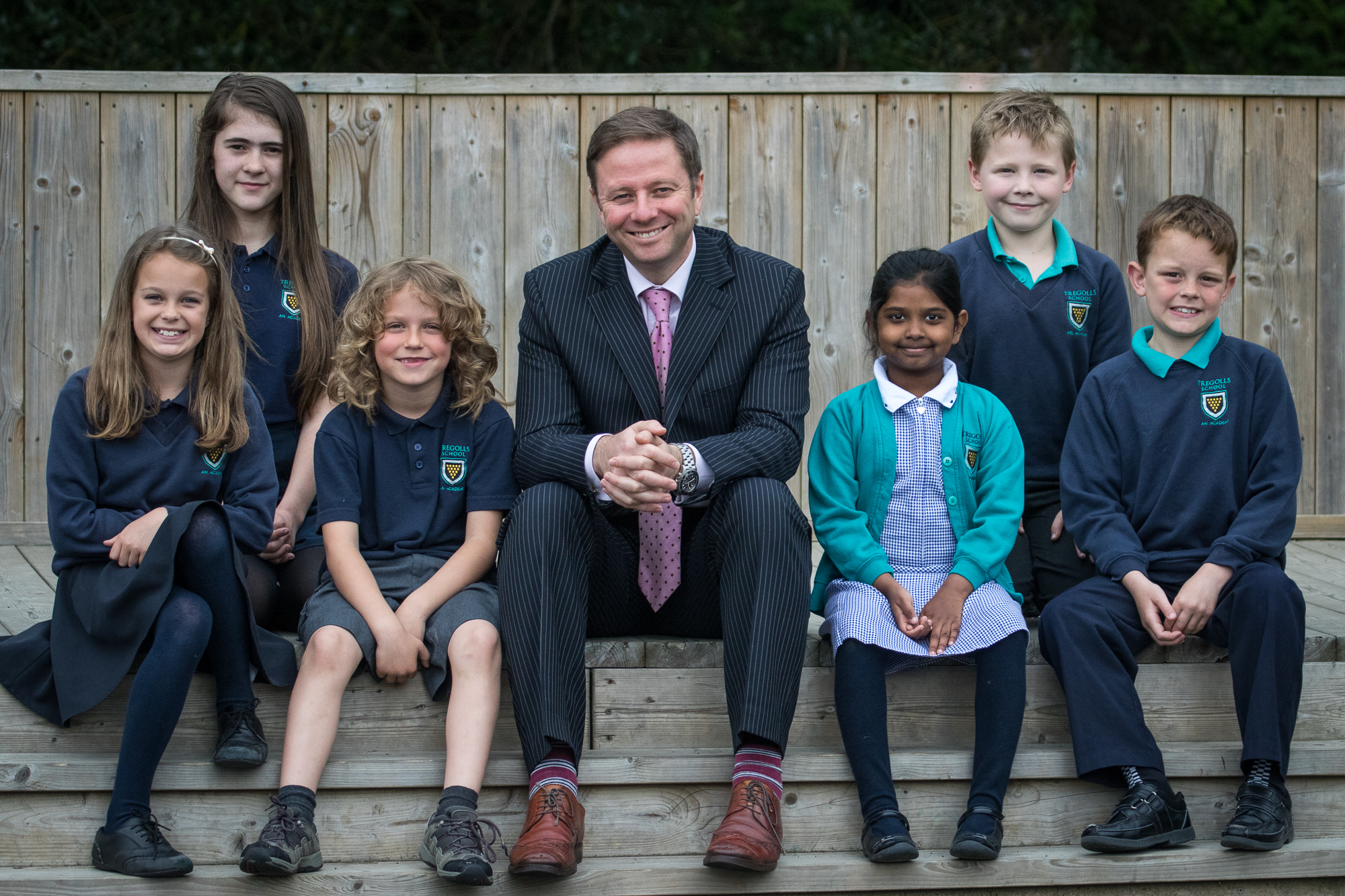
Matt Middlemore is headteacher of Tregolls Academy in Truro, Cornwall. He was voted Primary Headteacher of the Year in the 2016 Pearson Teaching Awards. Follow him on X at @matt_middlemore.
Why are achievement gaps still growing, despite pupil premium?

Let’s stop seeing ‘disadvantaged pupils’ as a monolithic group and start recognising how diverse they are, say Meena Wood and Julie Grimshaw…
The introduction of Pupil Premium funding in 2011 was originally intended to support schools in improving educational outcomes for ‘disadvantaged pupils’ – namely those eligible for free school meals, looked-after children and those with a parent in the armed forces.
All these years later, there seems to be little evidence of it having had overall success, with significant gaps in achievement still remaining – and increasing – between disadvantaged pupils and their peers.
Disadvantaged sub-groups
The reasons for this are complex, but one contributing factor is our continued use of ever more inaccurate labels for different pupil groups. Ofsted’s definition of ‘disadvantaged pupils’, for example, is wider than you might think, in that it includes pupils with SEND, as well as pupils receiving support from LAs.
If you were to illustrate some of these groups in a Venn diagram, many ‘free school meals’ pupils would straddle multiple sub-groups, such as ethnicity, special needs and gender. We would quickly see how the umbrella term ‘disadvantaged’ has become so broad that it’s now effectively meaningless.
Delving deeper into the data, we start to notice huge disparities around these disadvantaged sub-groups when they’re broken down by ethnicity, gender, geographical location and school phase. As noted in the Education Policy Institute’s 2023 Annual Report, Chinese pupils were a full two years ahead of white British pupils and white and Black Caribbean pupils by the end of secondary school, whilst Gypsy Roma pupils were over two-and-a-half years behind.
The available data also points to major differences in the size of gaps between disadvantaged and non-disadvantaged pupils across different regions. The three LAs with the fastest expanding gaps across school phases are Kingston-upon-Hull, Torbay and Blackpool.
London and the West Midlands, meanwhile, stand out as those regions with the smallest disadvantage gaps across all school phases – with Newham and Slough especially notable for their successes in consistently achieving the smallest disadvantage gaps at the end of primary and secondary school.
A ‘data-blind’ approach
Given these clear anomalies, then, why has Ofsted opted to clump all ‘disadvantaged’ pupils together in a single homogenous category since 2019? It seems like an especially strange move, since it was Ofsted itself that warned against adopting that very approach in 2015.
Perhaps they have latched on to the notion that ‘A rising tide lifts all boats’ – which may be true of the economy, but not of children. Every child or young person is, after all, an individual who won’t have arrived in school with a label neatly displayed on his or her forehead!
Within the current inspection framework, there’s very limited use of the highly nuanced information that’s available on pupil groups and regional differences. This ‘data-blind’ approach to inspection has led to claims being made by individual schools and trusts that their disadvantaged pupils require specific approaches if they’re to succeed.
Typical instances of these might include, for instance, ‘clear boundaries’, strict uniform rules, certain expectations regarding equipment and the application of prescribed sanctions for those failing to meet these expectations.
Unreasonable assumptions
Some professionals have been known to make unreasonable assumptions about low-income families – for example, the notion that such parents and carers are unable or unwilling to help, that their children don’t have clear boundaries at home, or that these parents are somehow insufficiently aspirational for their children.
We’ve seen one trust leader claim that, “In schools where behaviour standards are high, disadvantaged children do disproportionately well” – albeit with no supporting evidence cited. Elsewhere, we’ve seen a headteacher frequently use the term ‘deprived’ as a synonym for disadvantaged. The latter is, at best, patronising to children and their families; at worst, it’s insulting to those who don’t see themselves as ‘deprived’.
On the contrary, many of these pupils come from aspirational families who value education, who have developed a culture of respect for schools and are thus motivated to see their children succeed.
Aspirational strategies
As can be seen in the data’s variability by ethnicity, gender and region, such assertions are too generalised. The term ‘disadvantaged’ is itself too wide-ranging to use as justification for restricting certain approaches to behaviour – or indeed pedagogies – to pupil groups that will likely have an enormous range of needs, abilities, barriers and individual characteristics.
When designing our curriculum intent, we must surely be cognisant of this, and allow said knowledge to influence how we craft our aspirational and motivational strategies. The days of blindly following that clunky old model – under which the achievement of disadvantaged pupils is closely scrutinised and held up against outcomes for non- disadvantaged pupils –are surely over.
There can exist now a matrix of complex interactions between pupils’ ethnicity and gender, as well as factors relating to their levels of disadvantage and socio-economic status.
A sense of strong motivation and aspiration is what forms the foundations of positive attitudes to learning, and are integral to pupils ultimately achieving successful outcomes.
Reductionist and binary
By keeping in place a reductionist, binary model of reviewing attainment for disadvantaged and non-disadvantaged pupils, we’re putting up barriers to meaningful curriculum reform.
Presenting accounts of educational achievement that are uniquely framed in relation to one of these factors alone won’t be helpful for those schools wishing to adopt strategies that genuinely address educational inequalities.
A pathways curriculum with greater choice than the current EBacc offering is a necessity, and one which could be implemented alongside revised behaviour policies that serve to foster positive attitudes towards learning, rather than punishing pupils for relatively minor instances of non-compliance.
Terms such as ‘rich diet of knowledge’ may be closely associated with having an aspirational outlook, but unless the curriculum includes content widely regarded as relevant and engaging, then too many pupils – including many from the ‘disadvantaged’ group – will continue to conclude that school simply ‘isn’t for them’.
Nor can we ignore how knowledge is often presented in the school curriculum very selectively. ‘The best that has been thought and said…..to engender an appreciation of human creativity and achievement’ is what’s being promised – though precisely what this ‘essential knowledge’ is, how it’s selected and by whom are the key questions here, since not all pupils may perceive it as being meaningful in their context.
An extended curriculum
Other factors to consider include attitudes to learning, and the need for schools to counteract reactive behaviours – especially in the face of learning challenges encountered in lessons and towards authority figures.
Patterns of regular absence, truancy and exclusion will clearly influence the educational prospects of all pupils, and must therefore be taken into account when planning curriculum intent.
It’s essential, for instance, to consider the funding of an extended curriculum involving parents and other community stakeholders. We must also look at how we can best draw on a range of meaningful data about particular pupil groups, and use this to devise strategies that support learning and progress for all.
Finally, Ofsted should incorporate effective scrutiny of said data in its inspections, and cross-reference this against schools’ own self-evaluations. There is considerable scope here for school leaders to adopt a more nuanced approach when analysing pupil data, and to implement inclusive strategies that will genuinely help raise achievement for all pupils – regardless of their starting points.
Meena Wood is a former principal and HMI, and author of Secondary Curriculum Transformed – Enabling All to Achieve (Routledge, £24.99); Julie Grimshaw is a school improvement adviser, external moderator for ITE and a former HMI.
Spending pupil premium on tutoring to close attainment gaps

Now more than ever, the government can’t afford to squander funds by allowing pupil premium to remain unaccountable, says Simon Barnes, former teacher and founder of a teacher-run tuition company…
Pupil premium was established in 2011 as a way for schools to close the attainment gap among students eligible for free school meals. The programme provided support in maths and English up to GCSE level. The success of the first several years of investment was cause for significant optimism.
However, by 2019 the Education Select Committee noted that the funds earmarked for targeted tutoring were instead being used to “plug holes in schools’ budgets”. This was due to a lack of accountability for how they were spent.
Instead of catching up with their peers, DfE statistics show that the same pupils eligible for the premium were receiving fixed-term exclusions at a higher rate than before.
Using pupil premium effectively
Unfortunately, the programme’s precarious state was corroborated by the Education Policy Institute’s 2019 study of the 2017-18 academic year. It found that while primary schools continued to close the attainment gap, it had actually widened in secondary schools.
The Sutton Trust’s annual poll of teachers offered yet more evidence. It found that just 55% believed that their school was using the pupil premium effectively.
Since then, the number of schools focusing their pupil premium appropriately has improved somewhat, but there is still room for improvement.
Pupil premium plus
To understand where pupil premium went amiss, we must look to a parallel programme which has had greater success. Pupil premium plus is a similar fund which provides financial support for looked-after children and has managed to maintain its per-pupil attainment focus due to close government oversight.
Unlike the standard pupil premium, attainment is quantitatively assessed, and data is collected on metrics such as reading age, fluency and comprehension. Greater accountability for student attainment has resulted in a more successful, precise programme and – most importantly – better outcomes for children.
“Pupil premium plus […] has managed to maintain its per-pupil attainment focus due to close government oversight”
Another facet of the pupil premium plus that we must acknowledge is its focus on one-to-one tuition. I acknowledge that, as the founder of a tutoring company, I have a vested interest in this. However, I’m confident that whatever qualified party delivers the tuition, it’s a resource without parallel when it comes to closing attainment gaps.
Low-cost tutoring
A 2018 study by the Education Endowment Foundation demonstrated that low-cost tutoring can improve struggling maths students’ results by three months.
In 2020 my company delivered more than 29,000 hours of online tuition to looked-after children. Every student who received tuition made progress, and some demonstrated incredible rates of improvement – as much as a month’s progress per lesson.
Beside the numerical gains, direct tutoring also increases a child’s confidence, improves their communication skills and gives them the tools they need to overcome academic challenges.
Pupil premium plus offers examples of both the benefits of one-to-one interventions and the importance of meaningful, quantitative oversight. The programme’s focus on fundamentals, namely literacy and numeracy, also helps it to remain focused and effective.
Squandering funds
The EEF chief executive, Sir Kevan Collins, emphasised in the foundation’s report on the pupil premium that educational attainment is the single best predictor of lifelong success.
The government can’t afford to squander funds by allowing the pupil premium programme to remain so lacklustre.
Simon Barnes is a former teacher and founder of teacher-run tuition company TLC LIVE. Follow TLC LIVE on X at @tlc_livetutors.