


Why Childcare Professionals Must Soldier on With Risky Play
Those in our care are ready, willing and able to manage risk if only we give them the opportunity, says Philippa Fraser…

When we discuss how to create enabling environments within our settings, what factors do we consider?
Are our children’s resources accessible at all times, are there enough materials for the entire room, and are the activities on offer stimulating enough; in short, does everything work together motivating young children to learn?
Answering such questions seems integral to following the EYFS, and yet there is another way of empowering children which is sometimes overlooked in our safety-conscious society: giving them the opportunity to ‘do as we do’.
By this, I mean that they are afforded the same utensils as us grown-ups, along with enough time and space to use them well.
This idea of children working with tools is not new to Montessori nurseries or forest schools, and would be beneficial to implement in all childcare and educational settings.
Supervising the children wielding these tools may feel like a great challenge to nursery practitioners. The work may carry the risk of injury and some children in mixed age and ability groups may struggle to perform; these are two ideas which may discourage those in our industry from such provision.
Despite such fears, childcare professionals must soldier on with ‘dangerous’ play; hopefully our youngsters, in turn, will follow suit and learn patience, problem-solving and resilience.
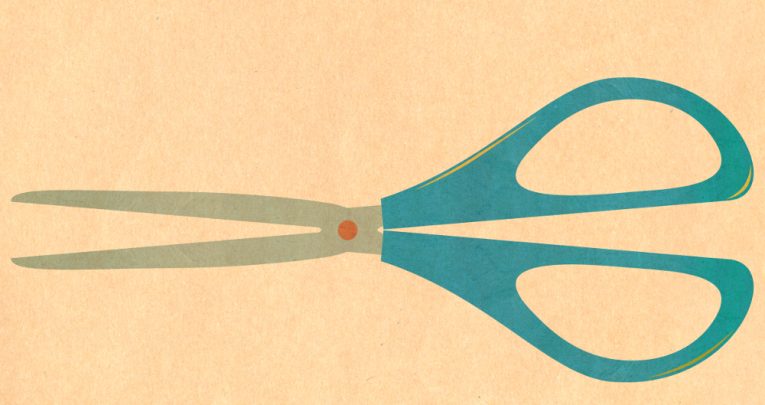
On the contrary, however, a child’s creativity and physical development may be stifled if they are not permitted to perform their own risk assessments or take part in managing the level of threat at hand (eg not being able to slice their own fruit at snack time or having only limited access to working scissors).
Our insistence on always playing it safe can put children in frustrating and embarrassing positions.
We would not dream of standing over a friend’s shoulder as she worked, highlighting every mistake she had made, before eventually taking the tools away from her and concluding that we “might as well do it ourselves”. What an unproductive attitude!
This is not only irritating and possibly anxiety-provoking, it is also downright rude.
This is one way in which I argue that childcare workers should uphold the same gold standard of behaviour with babies, toddlers and preschoolers as we would do in the presence of a cherished guest; you would want your guest to enjoy every moment of their stay, and maybe even to stay longer.
This desire should be at the forefront of practitioners’ minds, especially in our work with not-yet-verbal children – those who cannot tell us themselves how delightful or insufferable our behaviour towards them might feel.
If we are friendly enough, and the child warms to us, he or she may eventually relate to nursery staff as with extended family members.
Being generous with our time and resources – as well as our positive personal qualities – tells the child that he or she is important to us.
Moreover, it conveys the sense that the products of the child’s mind (eg self-made artwork and stories) also have value.
Repeatedly withdrawing or limiting their chosen activities suggests the opposite: that they are small, weak and incapable of said tasks. This is how children can be dismissed and de-skilled from certain hobbies before they have even had the chance to join in.
It is up to us childcare professionals to ensure this does not happen.
 Philippa Fraser is an Early Years Teacher.