
Seclusion room – The hidden trauma inside our schools
Emily Spring sets out what your school’s seclusion and restraint policies may be inadvertently teaching students about their sense of self-worth…

- by Emily Spring
- Governance professional at education charity Releasing Potential Visit website
When I was 13, I was sent to the seclusion room for two weeks by my head of year. I don’t even remember exactly what for.
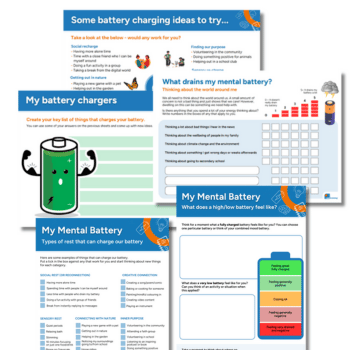
What I remember most clearly wasn’t the crime, but the punishment. We called it ‘The Desk of Shame’.
The trauma of the seclusion room
It was a single desk and chair, placed directly outside the head of year’s office. I recall sitting there in silence every day, all day, for two weeks.
No conversation; no schoolwork; no stimulation. Just me, my thoughts and the slow, interminable drag of time.
This wasn’t an example of ‘alternative provision’. It wasn’t a reflective space. It was social isolation. A form of psychological punishment. Public humiliation, even – and it didn’t help.
Those two weeks in the seclusion room were among the worst of my life. At the time I was already struggling, in that I was truanting, withdrawing and self-harming. I had visible cuts up my arms.
I was silently begging for help, but what I received instead was silence and shame. No one asked me what was going on at home. No one questioned the adult who told them I was ‘Just doing it for attention.’
“Those two weeks in the seclusion room were among the worst of my life”
And even if I was doing it for attention, shouldn’t that have meant something? What if I was behaving like that because I didn’t know how else to ask for love, safety or care? Instead, I was gaslit. Punished. Simply left to rot at that desk.
What are we teaching children?
As part of this punishment in the seclusion room, I was also repeatedly denied access to the toilet, told to ‘hold it in’ and to stop being disruptive.
I developed infections. I remember peeing blood. The experience has affected my body ever since, to the point where I now suffer with an extremely weak and overactive bladder as an adult.
Back then I was a child, in the process of being permanently harmed by people who claimed they were ‘teaching me discipline’.
“The experience has affected my body ever since”
So let me put it as clearly as I can – when we ignore children’s pain, what exactly are we teaching them? What are we effectively saying when we force them to sit in isolation in a seclusion room, in full view of their peers, for days on end?
What behaviours are we modelling when we tell them ‘no’ to toilet breaks, and then look away when they suffer for it?
We’re teaching them that their bodies are not their own, and that their emotions are wrong. That their needs are ‘interruptions’, and that they deserve punishment over understanding.
Above all, we’re teaching them that adults can’t be trusted.
A breach of rights and dignity
While I was never physically restrained at school, I now work in a setting where the use of restraint on children is something I’ve had to educate myself about, confront and reckon with.
For the avoidance of doubt, physical restraint is deeply traumatic for children. It doesn’t teach ‘emotional regulation’, nor does it help a child ‘understand their behaviour’, and it doesn’t make school a safer place.
What it does do is imprint fear. It conditions an individual’s nervous system to expect violence, and serves to reinforce that same message I was given all those years ago – that your body is not yours.
“Physical restraint is deeply traumatic for children”
In the UK, the restraint and seclusion of children – particularly those with SEND – risks raising serious concerns under the Human Rights Act 1998, specifically with regards to:
- Article 3, protection from inhuman or degrading treatment
- Article 5, protection against unlawful detention
- Article 8, the right to respect for private and family life – including physical and psychological integrity
When we isolate children in a seclusion room, deny their bodily needs or restrain them without lawful and proportionate cause, we’re breaching their human rights.
It doesn’t matter if we’re in a classroom. It doesn’t matter if it’s deemed to be ‘official school policy’. Children are people, and the law applies to them, too.
And yet, how often are these actions normalised as discipline? How often are they excused as being ‘only what’s necessary’?
The quiet violation of toilet denial
When a teacher denies a child access to the toilet, they may think they’re enforcing order or avoiding disruption, but it’s a practice that crosses a dangerous line and can have legal and ethical implications – especially when it results in physical or emotional harm.
As noted above, the Human Rights Act 1998 means that children, just like everyone else, are entitled to freedom from inhuman or degrading treatment, and that their private and family life – which includes their bodily autonomy and physical integrity – have to be respected.
Preventing a child from using the toilet can amount to degrading treatment, especially if doing so will result in them suffering from infections or bladder damage, or emotional trauma – such as feelings of shame, anxiety, or fear of wetting themselves publicly.
And that’s before you even get to the accompanying social humiliation and potential for lasting psychological harm.
“Preventing a child from using the toilet can amount to degrading treatment”
For children with SEND, a history of anxiety, trauma or other existing health needs, this isn’t just unkind – it can be abusive.
No adult has the right to override a childs basic physical needs in the name of classroom control. Holding in your urine isn’t a learning strategy.
Let’s talk about power
Too often, schools prioritise control over care. Adults can have a tendency to interpret emotional distress as defiance, with the result that children who are afraid, confused or overwhelmed can end up being labelled as disruptive, manipulative or non-compliant.
But what if we reframed those behaviours as communication? What if, instead of immediately reaching for punishment, we instead sought to offer regulation, connection and safety?
What kind of positive shift might we see if every adult were to ask themselves:
- Am I helping this child feel safe right now?
- Am I treating them with the same dignity I’d expect for myself?
If the answer to either is no, then what are we actually doing here?
A compassionate education
I now work in a charity SEN school that centres student wellbeing. It isn’t always easy, but it’s always intentional. We don’t use s seclusion room, and we don’t restrain. We do, however, reflect, repair and grow.
There is another way. Every child, but especially those with trauma, SEND or emotional challenges deserves support, not suppression.
They deserve teachers and staff who can see their full humanity, even in the hardest moments – because no child should ever have to bleed, break or beg to be believed.
Choice theory
The harm caused by seclusion rooms, restraint, and coercive schooling practices becomes even more stark when viewed through the lens of the Choice Theory model, first developed by psychologist Dr. William Glasser.
According to this model, all human behaviour is purposeful in that it attempts to meet one or more of our five basic needs:
1. Survival (safety, health, food, shelter)
2. Love and belonging (relationships, connection)
3. Power (a sense of competence, agency, achievement)
4. Freedom (autonomy, choice, independence)
5. Fun (joy, play, creativity)
When schools use a seclusion room or restraint, they often punish the very behaviours that are expressions of unmet needs.
A child disrupting the class may be seeking power in a system that otherwise renders them powerless. Someone begging to leave the room may be grasping for freedom. A child who lashes out might be crying out for love and belonging, or simply for safety.
“Someone begging to leave the room may be grasping for freedom”
Instead of seeing these behaviours as communications, adults will often treat them as threats to their control – and yet, the truth is that connection always precedes compliance, and that no real learning can take place until those five needs are honoured.
If we want children to thrive, rather than simply obey us, then we need to design environments that enable their academic goals while also meeting their psychological needs.
A compassionate, trauma-informed education will prioritise dignity over discipline, support over seclusion.
It will value understanding over restraint capacity, and see children not as problems to be fixed, but people to be understood.
Emily Spring works for the education charity Releasing Potential.