

Rokesly Junior – Building confidence & curiosity via oracy
What started as a focus on oracy has blossomed into a whole-school ethos,
building confidence and curiosity, finds Teach Primary editor, Charley Rogers…

- by Charley Rogers
- Editor of Teach Primary magazine
The sounds of school are joyful; yells of games in the playground, chatter in the hallways, and the din of a class just let out for lunch. But if you zoom in on these sounds, what will you hear? Well, that depends on the children, and on the school. At Rokesly Junior, it wouldn’t be unusual to overhear cogent, well-constructed arguments and points of view.
Because, you see, Rokesly Junior is firmly an oracy-forward school.
It all started post-lockdown. The teachers at Rokesly Junior School in Haringey weren’t too concerned about academic performance. They’d been teaching online throughout the school’s closure, and pupils were advancing through the curriculum well.
However, when the school opened up again, it was general life skills that the children were lacking.
About Rokesly Junior
- Headteacher: Bola Soneye-Thomas
- Location: Haringey, London
- Size: Three-form entry
- Extra info: Adjoined to Rokesly Infant School, which shares an SLT
“Socially, they were isolated,” explains Joanna Neilson, the school’s inclusion manager. “They lacked the communication and social stamina they once had.”
Various initiatives followed, says headteacher Bola Soneye-Thomas. “We added afternoon play and introduced Zones of Regulation to help children identify and manage their emotions. But we noticed a gap in communication skills.”
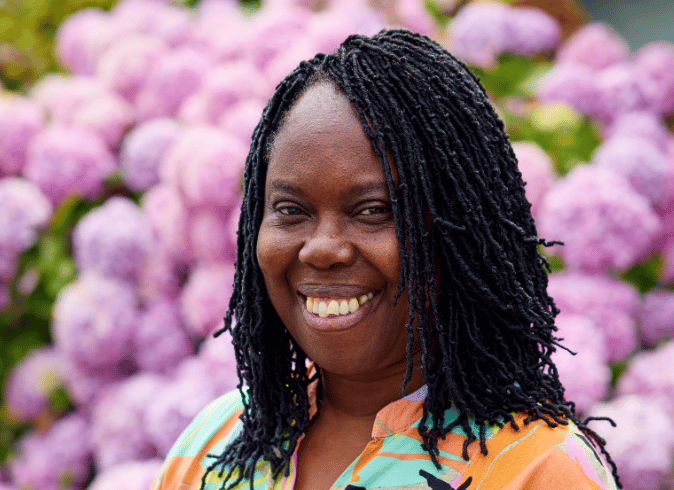
Headteacher Bola Soneye-Thomas
Bola decided then and there to do something about this. There needed to be a focus on oracy, and on encouraging pupils to talk to one another, as well as to their teachers.
“I appointed an oracy lead,” she explains, “because reading and writing are essential, but school should be about more than that. If students aren’t emotionally settled or socially skilled, they’ll struggle in the real world.”
Real talk
It’s the pursuit of this real-world skillset that continues to propel the leadership team and teaching staff at Rokesly Junior towards developing their oracy focus.
First stop: Madeleine Clinton, the oracy lead (and Y3 teacher) appointed by Bola. “I took on the role of oracy lead around two years ago,” Madeleine tells me. “The idea was to develop an approach that wasn’t just about encouraging communication and speech skills, but about explicitly teaching them”.
The first step in building this teaching framework was to create ‘talk rules’, says Madeleine. These help children stick to certain etiquette while conversing.
“The rules include things like disagreeing kindly, and listening to the speaker,” Madeleine explains. “They’re the same throughout the school, so that the children can develop under a framework with which they’re familiar”.
The framework also allows the children to have debates, even arguments, without them descending into chaos, says Bola.
“We expect disagreements; that’s life. But we want pupils to be able to explain their points of view, and discuss them calmly and fully with people who may not agree.”
“Strong oracy skills help with social cohesion between pupils from very different backgrounds”
Tackling misinformaton
The proliferation of misinformation is a key aspect of this skill, as well. With all the different information available online, the nature of ‘fact’ can appear to be much more debatable these days.
That’s why, Bola says, for Rokesly Junior, “it’s essential we teach children to think critically, ask questions, and evaluate what they’re told. Too many people still believe whatever suits them.”
Rokesly Junior is also incredibly multicultural, explains Bola, and this informs its teaching, too. Strong oracy skills help with social cohesion between pupils from very different backgrounds.
“Some children have never been to Oxford Street; others go skiing,” Bola says of Rokesly’s cohort. “They learn side by side, and that diversity teaches them to value different perspectives.”
There are also children who share classes, and come from countries that are historically hostile to one another. “We don’t shy away from difficult conversations,” adds Joanna. “We address them head-on and move forward together. It’s essential for building healthy relationships – not just professionally, but personally.”

Tell me more…
However, it’s not just rules for conversation that comprise the oracy focus. Rokesly Junior teachers – under Madeleine’s guidance – provide sentence stems modelling enquiry. These help pupils cultivate their own curiosity and information literacy.
“We embed big questions into our curriculum,” says Joanna, “in every subject, but especially in disciplines like history and geography, where there’s typically more room for discovery.
“We encourage pupils to connect knowledge with their own opinions and discuss them openly.”
Debate also lends itself to nurturing curiosity, tying in the children’s perspectives of what they’re learning, along with important information literacy techniques.
To this end, discussion is built in across the curriculum. Joanna explains: “You’ll see it in RE and history – like when children debate who was the greatest queen in British history. It’s not just about facts, but about understanding perspectives, and how narratives change over time.
“It’s not just about facts, but about understanding perspectives”
Nurturing curiosity nurtures creativity, too, argues Bola, and all the staff in school are keen to remind the children that learning is a lifelong process; not something that stops when you leave school.
That also requires teachers to be OK saying they don’t know something, Bola says. “Sometimes we’ll check answers later or research together with the pupils, depending on the context,” she explains, noting that the former option requires stringent rules about turning off the class screen before Googling anything, just in case something untoward slips through the school’s filtering system.
But as long as those measures are in place, Bola continues, “admitting uncertainty is powerful”. It takes a certain amount of confidence and security in your own knowledge and identity to admit that you don’t know something, especially when you’re in a position of authority like a teacher.
But this is part of the oracy focus, here. Not only are children taught how to be polite, respectful and coherent in their arguments, but they are supported to have the confidence to speak up in the first place.
And it seems that pupils are certainly not afraid to say what they think. “I had a great example the other day,” says Joanna. “We’re a very multicultural school, and one of our displays shows a map of the world with pins in it to show the countries that our pupils and their families come from. I was fixing a pin on it, and a Y4 child came up to me and explained that we didn’t have a pin for Columbia, and then started telling me all about his views on America and Columbia.
“His opinions were shaped by family and home life, and he felt confident sharing them. It shows children are listening, absorbing, and forming ideas early on.”
Walk the talk
It’s easy to see this kind of learning in practice, too. Walking through classrooms at Rokesly Junior, it’s clear that children are engaged, and – mostly – genuinely interested in what they’re being taught.
A science lesson in Madeleine’s Y3 class sheds light on how the sentence stems and talk rules work in real life. Children are shown three images on the board – one of a spider on a flower, one of a ladybird perched on a petal, and one of a butterfly, also on a flower.
Referring back to their previous science lesson on pollination, Madeleine asks the children which image they think might be the odd one out.
“Hands shoot up when asked to explain what they think”
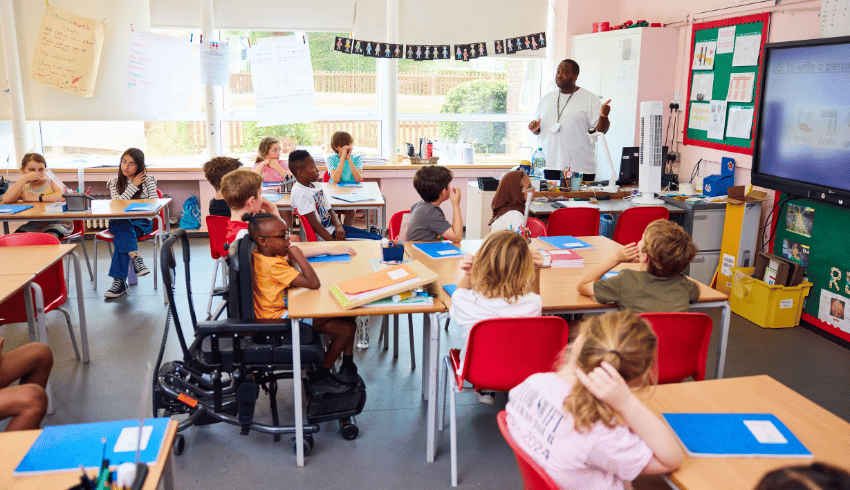
Pupils have time to discuss the question in their ‘talk trios’. (This is another feature of the oracy framework based on feedback from the children – some felt pairs put too much pressure on them to say a lot). Then Madeleine brings them all back together to discuss.
Hands shoot up when asked to explain what they think. We hear from a few pupils, all of whom use the sentence stems that are stuck to the wall under the board to structure their arguments. This includes things like “I think… because”, and “I can see why [X child] said… but I disagree because… ”.
The lesson allows for pupils to air their thoughts freely, while also being supported by a framework of suggested wording.
This setup also allows for discussions to be more balanced, says Madeleine. “When children are sharing their ideas, they will often use language like ‘I agree with so and so’, and ‘I would like to add’, so it’s influenced classrooms beyond the talk rules, to really giving the children more confidence to explore subjects.”
SEND and EAL
But what about children with additional needs, particularly those who may have speech delays, or are speaking English as a second (or third, or fourth) language?
Everyone is catered for, explains Bola. “We have a diverse cohort, not only in where the children’s families are from, but in terms of language, and additional needs,” she says.
Hand gestures are an important part of the oracy approach, and children include signs, such as putting one fist on top of the other to indicate they want to build on someone else’s point.
This, in combination with sign language lessons, gives children another outlet for communication beyond verbal speech.
Lots of the class teachers also make use of tokens, which gives pupils who may have trouble saying they want to contribute, a physical object to put on the table when they want to speak in their talk trios.
Tokens also help balance the discussions, as once a child has ‘spent’ their token, they’ve had their turn, which prevents groups from relying on one speaker, and allows everyone a chance to say something.
Teachers find this benefits all the children, not only those with additional needs.
Listen up
There is, then, a community feel to the way oracy is used and taught at Rokesly Junior. And that doesn’t stop at the school gates.
Madeleine, in particular, has been working towards building connections with the children’s families. “One thing I’ve been focusing on this year is building that link between school and home,” Madeleine explains.
“I introduced oracy homework, so every two weeks, the children are given a discussion statement. For example, ‘Playing a game is only fun if you win’. Children are then asked to discuss this statement with their families, and report on what opinions were shared.”
“What we teach children today is completely different from what was needed 30 or 50 years ago”
The same discussion statement is used across the school, so that families with more than one sibling at Rokesly Junior can have just the one discussion, says Madeleine.
Children are also encouraged to share their report in whatever format they choose – it could be a written explanation, a picture, or even a recording – and they can do so in their mother tongue, whether that’s English or another language.
This has really helped to bring the school community together, says Madeleine, and is the perfect opportunity to put into practice the idea that all points of view, and all voices (including different accents and languages) should be respected.
Speaking up
This whole movement – the communication skills, confidence building, and community links – represents the kind of education that Bola and her team want to keep evolving.
“The world has changed so much; what we teach children today is completely different from what was needed 30 or 50 years ago,” Bola says.
It’s comforting to hear that, although so many of today’s young people are burdened by worries about the future of the planet, and even supposed basics such as food security, Rokesly Junior aims to make sure that all its children can speak up for themselves, respect others, and maintain a curiosity about the world.
Bola’s own words sum it up beautifully: “Our job is hope”. And what a job they’re doing.
Family culture assemblies
Having the opportunity to hear about different cultures and languages is a central part of the celebration of all things oracy at Rokesly Junior.
This includes the children having the chance, twice a year, to take part in a class assembly that celebrates their family’s culture and language.
The assemblies are presented to the whole school, and families are invited along, too. Sometimes, the children will start by saying hello and good morning in their home language, so it truly showcases all the wonderful cultures that make the school such a vibrant place.
“I really wanted children in our school to have an appreciation and understanding of different dialects, languages and accents,” says oracy lead Madeleine Clinton, “because so many of our children have very different backgrounds. That’s part of what makes our school amazing.”
Meet the staff
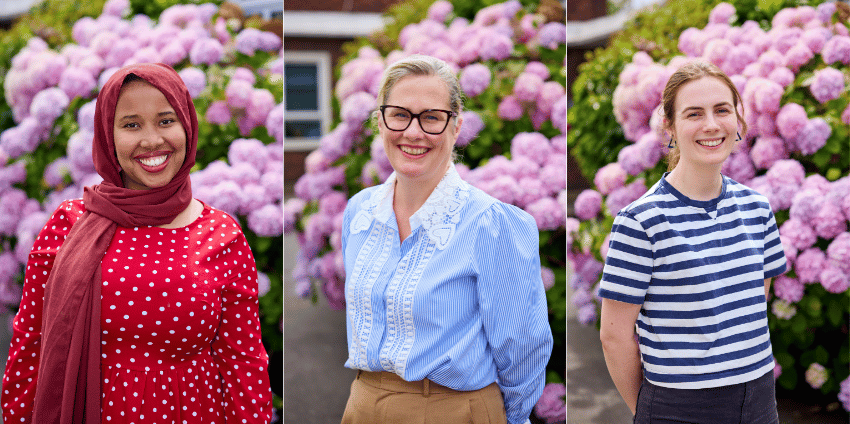
Chawahir Yusuf, Y6 teacher
Oracy helps with all subjects. It helps with writing, obviously, but also with things like vocabulary and reasoning skills in maths.
The children are now able to explain how they came to a particular answer more thoroughly and accurately, and it stretches pupils of all abilities.
Joanna Neilson, inclusion manager
We really encourage the children to share any worries they may have, and to use different strategies to deal with them, depending on what works for each individual.
We don’t want to shy away from difficult conversations, but instead make sure that there’s space to talk it out.
Madeleine Clinton, Y3 teacher and oracy lead
The oracy approach has really helped the children be more confident. I’ve noticed that they can then transfer their verbal skills into writing, too, and use the sentence stems to become more sure of themselves when expressing what they think.
It’s wonderful to see, and it really opens up discussions in the classroom.
Meet the pupils
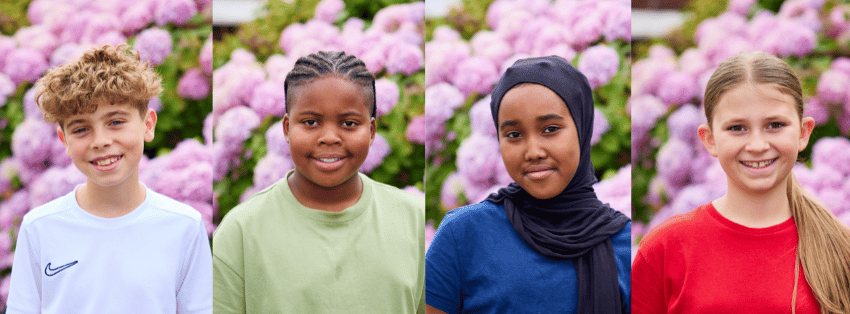
Theo
Teamwork and learning with others have become easier since we started using the oracy tools.
Zayn
Talk trios are more fun than just working in our books, because we get to talk about what we think with others.
Bilan
We’ve learned how to speak up for ourselves, and share our ideas. It makes it easier to talk to friends and family, as well.
Margot
I like that if you don’t agree with something, it’s not a big deal; we’re still encouraged to say what we think.