
COVID-19 – How one international school confronted the challenges
How hard is it to oversee a student population hailing from 70 different countries during a global pandemic? Barny Sandow, head of school at ACS International School Cobham, shares his experience…
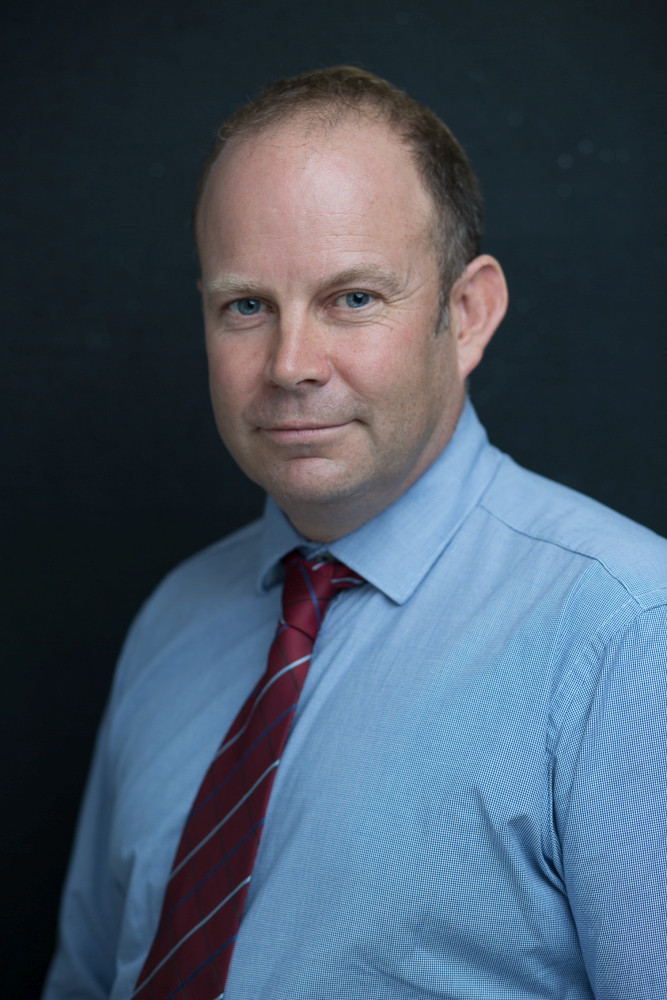
- by Barny Sandow
- Principal of Nord Anglia International School Dublin
I remember when I first arrived at ACS International School Cobham, moving here after spending a number of years overseeing a school in Brunei. I can still recall seeing the school’s campus for the first time, 25 minutes out of Heathrow Airport.
Having begun with just 175 students in the site’s original manor house building, we now have 1,200 on roll from ages 2 to 18, with many studying the International Baccalaureate Diploma Programme in their High School years. We have a very broad international offering, however, so we also have students studying for high school diplomas and advanced placement qualifications.
Safer and richer
The key thing for us in recent months has been our outdoor education provision. We’re fortunate enough to have on-site woodland that we use for our Forest School offering, but we also try and get students across the school outside as much as possible.
Beyond the expected PE lessons, we’ve endeavoured to hold classes outside, where appropriate. Take humanities, for example – a lesson on early man involving a classroom exploration activity was made into a safer and richer learning experience by being held outside.
We don’t simply encourage going outside for the sake of it, though. We’ll always carefully consider beforehand how the students’ learning can be made better by going outside and using our different outdoor spaces. On the whole, however, we’ve seen everyone’s sense of wellbeing improve by spending time outside and being more active. The pleasant weather we had during the initial lockdown seemed to help everyone reconnect a little more – I suspect things would have been more challenging for us, had we not been able to do that.
We’re especially thankful for the strength of our school community. It sounds paradoxical, but being an international school attended by students of over 70 different nationalities makes our community tighter than most.
Many of our students and parents have few or no family links here, with the result that we’ve seen everyone really pulling together to support each other.
Where there have been concerns, people have listened to our advice and communications and opted to isolate. I’m hugely grateful to our facilities teams who have moved mountains to create a safe school environment, complete with handwashing stations and outside shelters so that the students are able to stay dry at break times and at the start and end of the school day.
Back to the 1950s
And then, of course, there are the ways in which our teachers have had to adapt their practice. International schooling, and the pedagogies we have here, tend to be focused around children learning and working together, and solving problems by collaborating and communicating. Now, however, they’ve effectively had to go back to teaching in traditionally-styled classrooms, with all desks facing forwards as if it were the 1950s.
We’ve had to contend with a number of tough wellbeing challenges and are highly aware of how important it is to recognise them for what they are, and that people here feel able to talk about them. It would be hugely inappropriate to not recognise the many new stresses teachers are now under, and I’m enormously proud of how they’ve stepped up to the challenge.
Colleagues have been able to express their feelings in a full and frank way via staff forums that are moderated by our HR team, and we’ve continued to organise regular wellbeing surveys among staff and students to identify any issues and what we can do to address them.
The students have been remarkably resilient on the whole, but there will always be those kids you need to look after, and we’ve worked with partners at the Family Wellness Practice to ensure that safety net is in place.
Phenomenal pivoting
We have boarders at the school, and have found The Boarding Schools Association to be a fantastic source of support and helpful advice. Its BSA COVID Charter provided us with a clear set of guidelines to aim for when reopening our boarding house, while giving both ourselves and our families a sense of safety and quality assurance in what we were doing.
When our 150 boarders rejoined us at the end of last August, they’d come from some 30 different countries around the world, so we had a number of students quarantining for a time. We’d considered bringing them back earlier, but after considering the prospect of keeping them in their rooms with nothing to do for a fortnight, we felt that would be significantly more damaging for their wellbeing than simply giving them schoolwork to be getting on with at the start of term via video conferencing and our VLE.
That speaks to how the entire profession has been through the most dramatic staff development experience any of us have ever experienced. The pivot we’ve seen to online has been phenomenal – last year we were accredited by the New England Association of Schools and Colleges, which told us that we’d completed two years’ worth of professional development within just two months.
Human contact
The main thing I’ve learned over the past year is the place of artificial intelligence and digital learning within schools – how important and essential they both now are, but also that such systems aren’t replacements for, but rather supplements to existing, high-quality human connections.
The schools that have utilised these technologies successfully are those that have paid attention to the wellbeing and interpersonal relationships of their community, because when you do that, children will flourish and thrive, and develop healthier relationships with each other and their teachers.
I remember having conversations around the ‘fourth educational revolution’, back when teaching staff were all apparently going to be replaced with robots. The processes we’ve worked with over the past year have clearly shown all of us that that’s simply not going to happen. If kids are to make progress, there has to be that human contact.
My message to national education leaders would be to step back, take stock and consider what can be got rid of from the education system as it currently stands – what doesn’t need to be there? I know that I’m grateful to work in a school system where we don’t do SATs or exams at 16, but instead allow children to be children and grow.
I once accredited a school where no external exams were held until the students were 18. I asked them how they could know where the children were, and was in turn asked if I knew how much time the school consequently got back.
If your Y11s don’t lose a whole term just sitting the exams themselves, and if the huge amounts of preparation time within the preceding two years were to simply go, how much more time would you have that you could then spend on wellbeing and developing the actual skills students will need to survive in the real world?
What would YOU do?
Earlier in the year we carried out a series of scenario planning role-play exercises with our teaching staff and parents via Zoom. We had different individuals fill various senior roles – mine, the deputy head, the principals of different sections – and familiarised them with the information and protocols their role entailed.
We then presented the initial situation to them, under which they had to manage the running of the school – and proceeded to feed them new information every five minutes, such as text messages from worried parents and updated guidance from public health authorities.
Through doing this, we were able to ensure that teachers and parents alike wouldn’t have simply glanced at the school’s assorted medical sheets, protocols and flowcharts, but would have actually absorbed them and thus know what needed to be done in the case of a genuine outbreak. Everyone heaved a sigh of relief when they completed that hour-long exercise, but it certainly gave them all a detailed understanding of our processes.
Barny Sandow is head of school at ACS International School Cobham; for more information, visit acs-schools.com/cobham or follow @ACSCobhamSchool.