

Media literacy – Why it needs to be on your curriculum

Given today’s febrile news landscape, schools can’t afford to not put media and information literacy on the curriculum, says Nicky Cox…

- by Nicky Cox MBE
- Editor-in-chief and co-founder of First News Visit website
We can’t see media and information literacy as just a ‘nice to have’. It’s an essential, and schools have a vital role to play in its delivery.
When I co-founded the UK’s first newspaper written exclusively for children – nearly 20 years ago now – I did so with a very clear mission in mind.
Quite simply, I’ve always maintained that the world will only improve if the next generation is better informed than the last.
Today’s young people have vastly more access to information than their parents and grandparents at the same age. But how much of it can they trust?
Within just a couple of decades, the nature of news and how we discover it has changed beyond recognition. Once, families might have sat down together to watch the 6 o’clock news, or spread the Sunday papers out over the kitchen table to catch up on the week’s big stories.
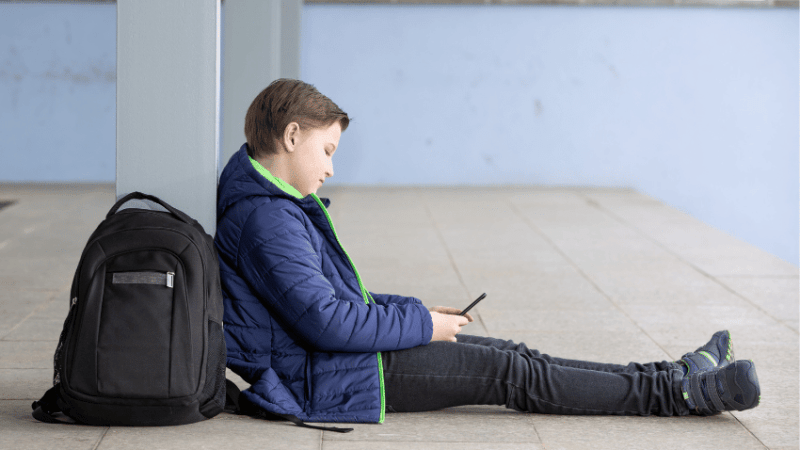
Now, we regularly expose children as young as five to content that claims to be delivering information about current affairs via mobile phones and social media. (According to Ofcom, 37% of parents to 3- to 5-year-olds say their child uses social media apps or sites).
Yes, they may stumble across reliable journalism. However, they’re much more likely to encounter opinion dressed up as fact, or disinformation spread either deliberately or through ignorance. Some of which will be deliberately designed to provoke clicks, fear and even hatred.
Skills to thrive
Of course, I can already hear the furious mutterings from brilliant and overstretched teachers: ‘Really? Yet another ‘vital set of skills’ I need to crowbar into an already packed curriculum? When? And how?’
But the truth is, the information environment children grow up in influences every subject, lesson and interaction in schools.
Pupils can’t truly thrive, academically or personally, if they don’t have the skills to separate fact from fiction. Or if they’re too anxious or cynical to engage with the world around them.
Media and information literacy doesn’t just protect young people from the darker corners of the internet (important though that is). It gives them the tools they’ll need to engage with all aspects of today’s curriculum and fully participate in society.
No time to lose
A young person able to analyse a news story, identify bias and form their own evidence-based view can contribute meaningfully to class discussions and later, democratic life.
Because let’s not forget, they’ll soon be invited to cast their vote for the first time once they’ve turned 16.
“Many people, including me, are hopeful that media and information literacy will find a more prominent home in the school curriculum as a result of the current curriculum review.” So says Fran Yeoman, head of journalism at Liverpool John Moores University, and a trustee of the Media and Information Literacy Alliance (MILA).
“However, we should not adopt a ‘wait and see’ approach when it comes to ensuring that our children have the key skills they need to thrive in this complex information environment.”
At First News, we couldn’t agree more. We feel a deep responsibility to be part of the solution, which is why we’ve partnered with MILA to produce a clear and practical framework for the teaching of media and information literacy in secondary schools.
Drawing on MILA’s pioneering work in this space and the Bournemouth University theory of change for media literacy, the framework is free to download and can be used by educators to plan media and information literacy lessons with genuine impact, and track the progress of pupils in a meaningful way.
An education essential
However, we know that real change doesn’t just emerge from the work of a single organisation or media outlet. As Fran Yeoman observes, “Whether mandated by the curriculum or not, children need media and information literacy education that is broad, critical and creative.”
This requires schools, policymakers and wider society to recognise that media and information literacy is as fundamental to a great education as reading and writing.
Because without it, the next generation won’t just be less informed than the last; they could grow up indifferent as to whether what they’re being told is true at all.
5 media and information literacy basics when analysing news
1 Source – who published this? Is it a recognised outlet or individual, or posted anonymously?
2 Evidence – what proof is given? Are there any quotes? Any cited data? Or just opinions?
3 Bias – whose perspective is being shown? Is there another side we’re not hearing?
4 Emotion – does the piece use language or images designed to provoke, rather than inform me?
5 Verification – can I find the same story with the same facts somewhere else that I trust?
Nicky Cox MBE is editor-in-chief and co-founder of First News, the UK’s original news provider for children. Download the First News MIL secondary framework.