

Harris Science Academy East London – A dramatic turnaround
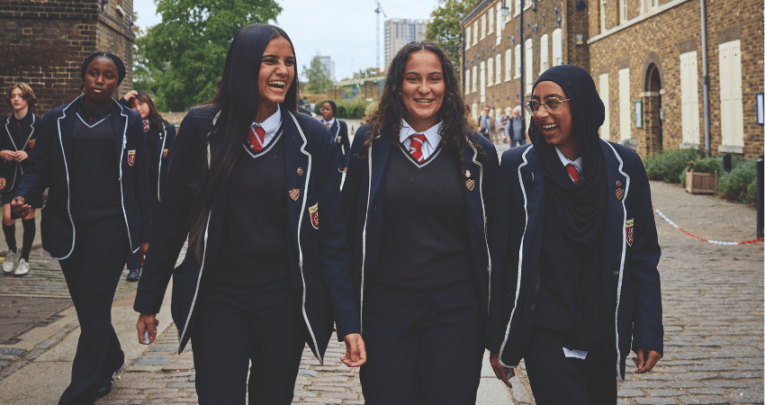
We hear how the leadership, staff and students of a struggling school in East London – one located on a small island, beside a film and TV studio – were able to enact a dramatic turnaround…

- by Callum Fauser
- Editor of Teach Secondary magazine
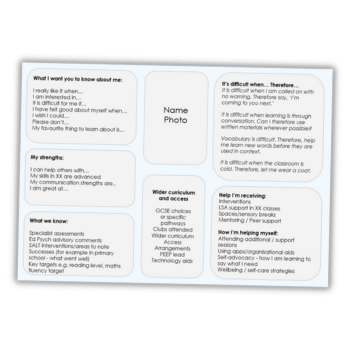
In 2021, The Harris Federation took over East London Science School – a free school that had been placed into special measures by Ofsted. Re-founded as Harris Science Academy East London, staff at the school embarked on a major process of change and renewal, and have since received plaudits from Ofsted. The Harris Federation was also announced as winner of the ‘Trust of the Year – 10 Schools or More’ category at this year’s Tes Schools Awards.
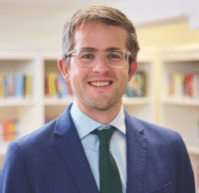
Dan MacPherson, principal. Secured first teaching role in 2012 at a boys’ grammar school in Essex. Appointed as a senior leader at a North London independent school.
Joined the Harris Federation as a head of department. Spent five years as an assistant principal and latterly vice principal at a school in Greenwich. Appointed principal of Harris Science Academy East London in February 2023.
Back in 2021, the school’s situation was very poor. Ofsted judged safeguarding as ‘ineffective’, behaviour as ‘inadequate’, and teaching and learning as ‘requires improvement’.
Students only get one chance at their secondary education. Therefore, we had to work quickly to improve the position the school was in.
Harris Science Academy East London has since changed beyond recognition. In April 2025, Ofsted visited. It judged us Outstanding in ‘leadership and management’, ‘behaviour and attitudes’, ‘personal development’ and ‘quality of teaching’.
We’ve gone from being a school where children said they didn’t feel safe, to one that’s now thriving, growing and really delivering for the children.
Challenging yet rewarding
For me personally, the process of transformation has been quite challenging. We’ve done lots of hard work done, but much of it’s been hugely rewarding.
What first attracted me to this school was how fantastic the children were. Both then and now, they have such a sense of drive and purpose. They just needed the right kind of environment and provision.
I took on a new school as its founding head – my first headship, in fact – knowing that it was going to be hard, but confident that we could do it.
Several years on, I’m now even more excited and certain that Harris Science Academy East London is going to be one of the best in the country within the next few years. If we could transform to the degree we have in three years, what else could we do in another three?
The job is as motivating now as it’s ever been. The location of the school is quite unusual in that we’re situated right beside a major film and TV studio.
MasterChef is filmed just along the cobbled street outside. At the start of this academic year, they were shooting a film just around the corner from where we are.
We need an extra layer of leadership and community relations here. We’re part of a complex ecosystem made up of ourselves and other users, in what’s a very special area.
Disciplined decision-making
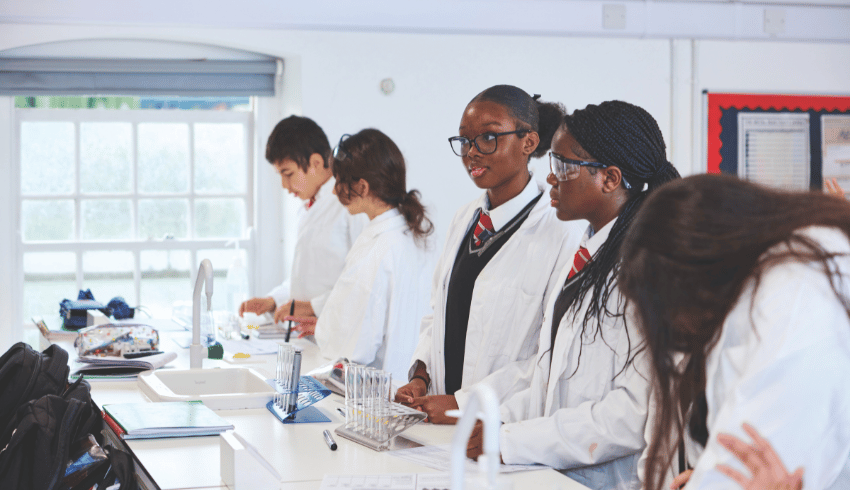
The school where I was a deputy head underwent a similar transformation journey. It went from being a fairly average comprehensive to being ranked among the top ten schools in the country for progress.
Therefore, I already had a fairly clear idea as to what the stages of school transformation should look like.
What was transpiring at the school when I arrived clearly couldn’t continue. It wasn’t serving the students, who were feeling unsafe due to inadequate behaviour and safeguarding policies. It wasn’t serving the staff either. Many of them were having to work twice as hard as their professional peers but were achieving less than a tenth of the impact.
An early move was to try and bring people together, draw a line under how things had been, and resolve to move forward.
When taking on a school that’s in special measures, everything needs to change immediately. However, we needed to be disciplined when deciding on the order of those changes.
We were fortunate, however, in being able to call on a real depth of experience from within the Harris Federation. For those first 18 months, it was very much a real team effort.
Addressing safeguarding
A major priority in the first term was to get the school back to being safe and legal. We had to address a long list of compliance issues around safeguarding.
We had to improve our site security, review our protocols and processes around keeping children safe, and review our processes for reporting and following up on concerns.
I was able to work alongside an executive principal with considerable experience of Ofsted inspections. They were prepared to sit alongside me and work through all of the things that needed doing.
It was that, along with other instances of support from the Federation and external providers, that helped us to resolve those problems quickly, and get on to a more stable footing.
Boosting morale
There were some other ‘quick fixes’ we were able perform. However, many of the students in that first year were pretty browbeaten.
They knew they didn’t go to a good school. I was conscious that the change process shouldn’t make them feel as though they’d done something wrong.
Ultimately, students respond to their immediate environment and the people around them. My job was to try and perform the most extensive work during that first year and boost overall morale within the school.
I stressed to the students that they were worthy of going to a fantastic school, had the potential to help create one and that making this fantastic school a reality would be a team effort.
Over a series of assemblies I talked about the need for us to share a common mission, ethos, set of values and vision. That vision was for all of our students to go on and become leaders in whatever they choose to do.
We wanted a powerful and uplifting vision with social mobility at its heart, affirming that such things weren’t just possible, but likely and probable if we successfully work together.
Positive recognition
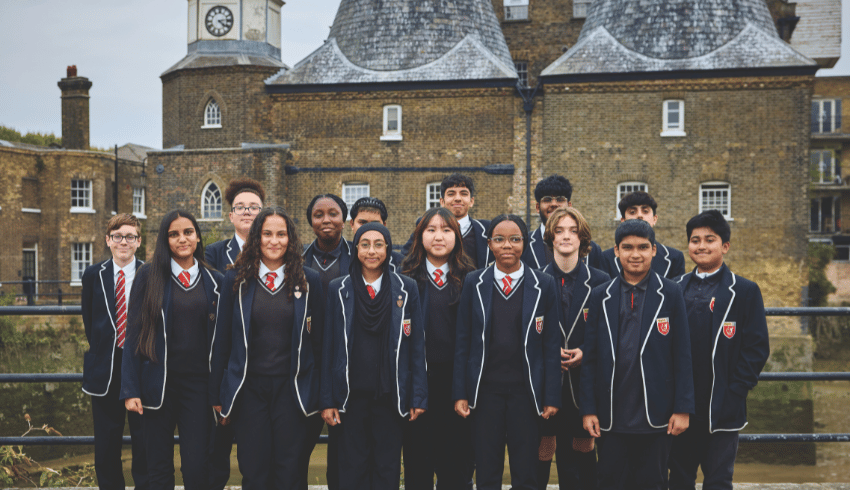
In September of the second year, all students received a brand new uniform. That was a real ‘You are part of something new and special’ moment.
It was important that older cohorts, who had attended the school both before and after the changes, were able to tell Ofsted and others the story of what they went through in Y7 to Y9 – not having teachers for different subjects, being set incorrect homework, not being listened to when trying to raise concerns.
That was partly why I wanted to focus on positive recognition, and ensure that students who do the right thing feel that their efforts are recognised and valued.
After establishing and codifying those habits and behaviours of what successful students do, we could then build our behaviour policy around the notion of ‘Here’s what successful students do’, using that as a motivator.
Clear expectations
It was important to me, given the staff’s prior experiences of poor leadership at the school, that they had at all times a clear sense of what Harris Science Academy East London’s expectations would now be and why.
Leadership shouldn’t be about meeting arbitrary standards. Everything we do at school should be clearly linked back to our core purpose.
Every member of staff should know and understand why they’re being asked to do something. The reasons will usually involve the need to provide consistency for our students.
When students can be relied upon to do what they need to do, it’s easier for staff to concentrate on being great teachers. Everyone wins.
I believe that for the first time in a while, staff here know that SLT are conscious of their day-to-day experiences, and aware of the improvements they want to see.
We’ve also clearly set out to staff how good education is the result of highly effective teams – not isolated individuals going above and beyond.
For education to be sustainable, it has to be a team sport. Even after that, though, you can’t stop having those conversations.
Once you stop talking to colleagues about your school’s purpose, mission and vision, that’s when things can start to fray at the edges.
Student leaders
The school’s student leaders – one per tutor group, amounting to around 20 – are elected for a year. They meet with me every half term to review our latest student survey.
I also take suggestions from them as to how the school can be made better. My guiding principle is that student voice can’t be used to lower standards, make us look less professional or cause students to get lower grades.
For instance, our student leaders came up with some great ideas for reducing queueing times at lunch. This prompted us to implement staggered start times for different year groups.
We want our students to feel that their voices are being heard, but also understand how some suggestions might be beneficial to their short-term interests and be less positive in the long-term.
Meet the staff at Harris Science Academy East London
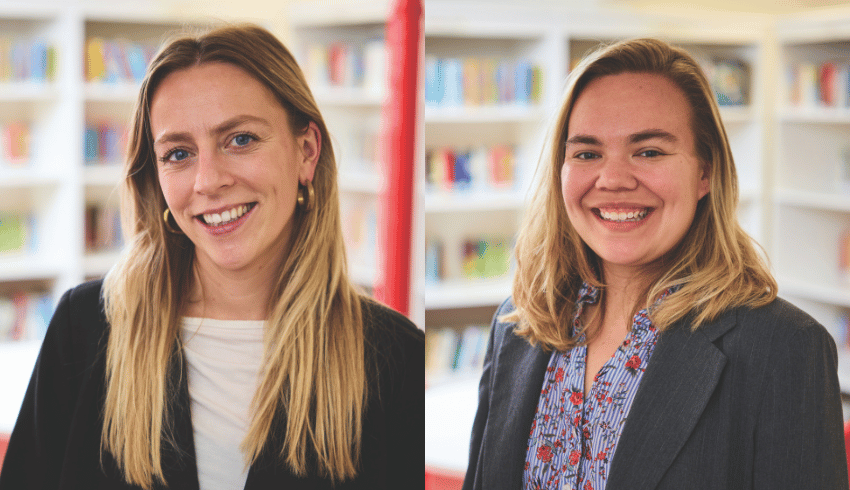
Isobel Harvey, head of art and character education
There are continuous efforts at building a strong community here. The behaviour system is really tight. Everyone’s on board with it, and we’re all rowing together, following the same structure. This makes things easier to manage.
There’s a lot of support with the systems we have in place, and the kids always know what to expect. That means they know where the line is, which is really helpful when teaching.
One thing I’ve wanted to prioritise in the art department is enabling students to take up more space with their artworks. I think there’s a real issue in our education system with students often being encouraged to use only small sketchbooks to create relatively small pieces of work.
We’ve also combined art and D&T in Y7 and Y8, with students doing projects that start out as 2D creations before being turned into 3D sculptures.
They then choose between doing art or D&T at Y9 – our GCSE art option is actually ‘art, craft and design’, because I wanted to include multiple design elements, and ensure the course wasn’t just based around students’ demonstration of fine art skills.
Character education
At the end of each term, students take two days off timetable. We’ll organise trips, in-school guest speakers and other activities.
If, say, students haven’t chosen any creative subjects for their GCSE options, our Character Education Days can show them how there’s still value in those skills.
Making sure that every child can get at least some access to a huge range of different activities and opportunities can cause some students to suddenly realise how much they might like a field of study they’ve never sampled before.
It’s a way of giving our students a real breadth of skills, keeping their horizons open and helping them envisage more creative possibilities for their future careers.
Katherine Mendes, head of music
One of the things I like most about working here is that, compared to where I was teaching before, there’s so much more structure. There are many school-wide policies – not just around behaviour, but also around lesson planning and organisation.
Some teachers might object to that, and complain about not having enough agency. However, those guidelines for how to approach your classes actually makes it easier to be creative. You can identify the things that students enjoy most within the subject and focus on those.
When I’ve organised field trips, started extracurricular clubs and formed a student music ensemble, Harris Science Academy East London has proved to be more supportive than I ever could have imagined.
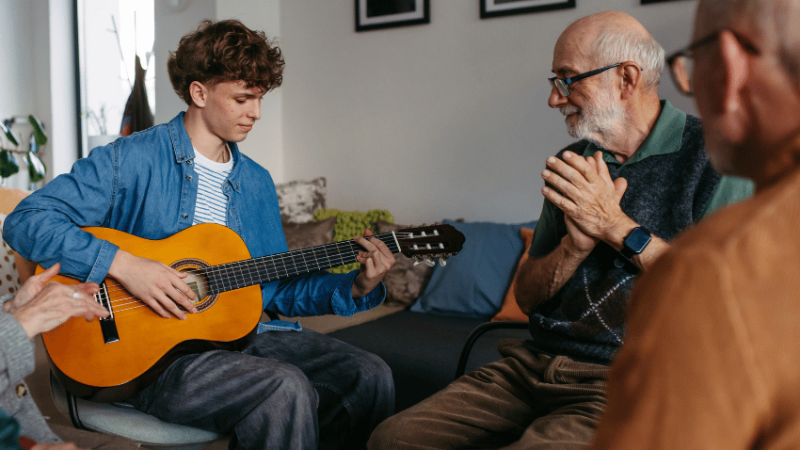
A big project for me has been the creation of a peripatetic instrument lesson curriculum. We currently offer lessons in flute, clarinet, saxophone, trumpet, trombone, violin, guitar and piano.
The school has been supportive throughout, both in terms of funding and making allowances for scheduling. Last year we had around 35 students signed up – this year that number’s up to 65.
Pupil voice
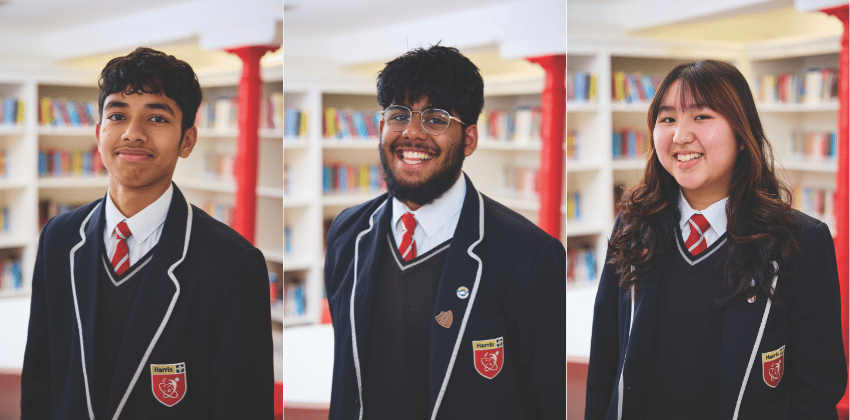
Ikram: “When I was in Y7 at ELSS, the homework wasn’t as challenging. The focus wasn’t on designing homework for students, but on making it easier for teachers to grade.”
Isa: “The change has been transformative. Before, there was no rigidity around upholding behavioural standards, or submitting homework on time. The Harris Federation has implemented these new procedures that have given a backbone to the school.”
Hana: “I started in Y7 before the merger with Harris, when lessons weren’t as structured. Every lesson now has a Read Now, Daily Review, Exposition and Deliberate Practice.”
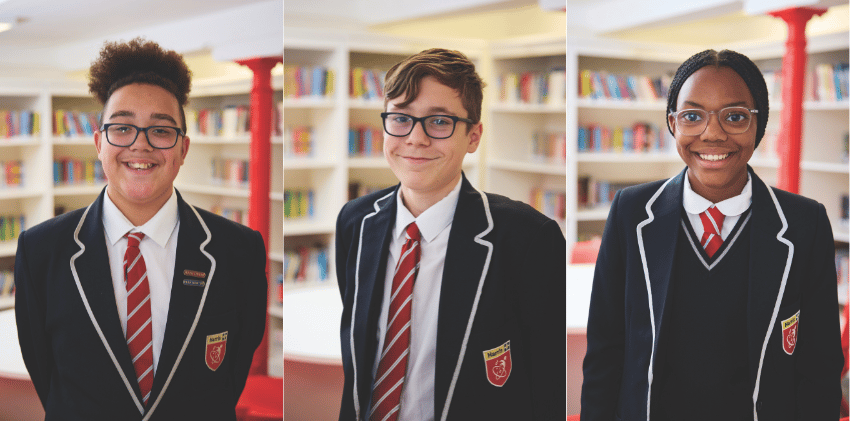
Daniel: “My favourite subject is science, and my favourite part about Harris Science Academy East London is the number of after-school clubs.
Teddy: “People are getting better grades now, with better, more professional teachers. Before the school changed there were a lot of cover teachers. Some people got a less fair amount of education than others.”
Jenia: “My favourite thing about school is going on trips, being part of music concerts and doing things that maybe other schools wouldn’t do.”