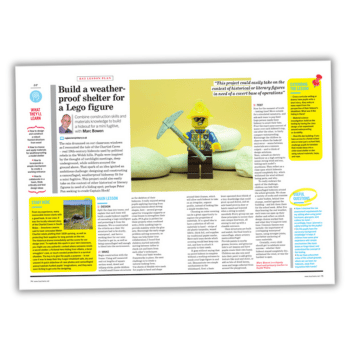



Combine construction skills and materials knowledge to build a hideout for a mini fugitive…
The rain drummed on our classroom windows as I recounted the tale of the Chartist Caves – real 19th-century hideouts used by political rebels in the Welsh hills.
Pupils were inspired by the thought of torchlight meetings, deep underground, while soldiers scoured the ground above.
That spark of an idea ignited an ambitious challenge: designing and constructing a camouflaged, weatherproof hideaway fit for a mini fugitive.
This project could also easily take on the context of other historical or literary figures in need of a hiding spot; perhaps Peter Pan seeking to evade Captain Hook!
Learning objectives
- Design and construct a robust framed structure from wood
- Choose and apply materials for weatherproofing a model shelter
- Incorporate a simple mechanism to create a working entrance
- Collaborate in a team, think critically and test design ideas
Starter activity
From my experience, every memorable lesson starts with a good hook. In our case, it was the locally relevant story of the Chartist Caves in South Wales. These are limestone caverns said to have concealed Welsh Chartist rebels plotting their 1839 uprising, as well as protecting their supplies for long periods on the run.
The historical drama immediately set the scene for our design brief. To replicate this spark in your own classroom, you might use any authentic context where someone needs a secret shelter. Think a fictional hero hiding from villains, a local smugglers’ cave, or much-needed protection in a survival situation.
The key is to give the pupils a purpose. In our case it was to keep their tiny (Lego) inhabitant safe, dry and unseen!
A quick slideshow of cave photos and camouflaged animal habitats fuelled pupils’ imaginations. They were soon itching to get onto the designing.
Marc Bowen is a deputy head and primary teacher at Raglan CiW VC Primary in South Wales.