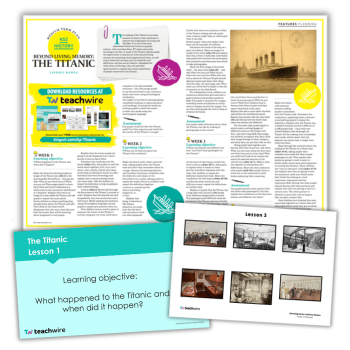



PDF medium-term plan and PPT, Word and PDF resources
KS2
Years 3-6
The sinking of the Titanic is an iconic moment in history that really captures the imagination of KS2 pupils (as well as adults!)
It is one of the most represented historical events in popular culture, with countless films, TV series and novels focusing on its fate.
This download contains a six-week medium-term plan, plus lots of extra resources to help you teach the unit. We’ve also included a KS2 music lesson plan based on the Titanic.
Why study the Titanic in KS2?
A study of the Titanic affords pupils the opportunity to examine an event beyond living memory by examining what happened and when, as well as key historical concepts such as similarity and difference, and the use of evidence.
Alongside the wider story of the ship, this unit provides opportunities to explore the human experiences of people connected to the Titanic.
Learning objectives
- Find out what happened to the Titanic and when
- Use evidence to find out about the Titanic
- Learn what was similar and different for first- and third-class passengers on the Titanic
- Explain why the Titanic was a disaster
- Find out who Violet Jessop is and why she’s significant
- Learn how we remember the Titanic today
Lindsey Rawes is a primary teacher and history lead. She is also a chartered teacher of history for the Historical Association.
Compose a ghostly piece of music
By following this series of Titanic KS2 activities, children will compose and then perform a piece of music that describes an imaginary tour of the Titanic wreck.
Titanic KS2 learning objectives
- Explore, choose, combine and organise musical ideas within a musical structure suggested by JJ’s tour of the Titanic
- Use ICT to capture and change sounds
- Combine and organise musical elements
- Record and perform your music with a graphic score
Starter activity
Discovering the wreck of the Titanic two and a half miles under the Atlantic was made possible thanks to new underwater technology.
In 1986, a remote controlled robot called Jason Junior (JJ) swam around and inside the wreck taking still pictures and video.
Show children video footage of the wreck, then ask them to imagine exploring the Titanic wreck. What might they discover at those depths? What would it look and feel like (pitch black / extreme cold / intense pressure)?
At this point, there’s also an opportunity to discuss the science of underwater exploration. Explore why we use robots to explore the wreck in place of divers.
To prepare for the next stage of the lesson, ask the children to research some of the objects that have or might be discovered in the wreck. These include:
- Rusticles
- Boilers
- Chandeliers
- Titanic’s three-tone whistles
- A musical box
Kevin Hamel is a primary educator, and the curriculum development officer for the Cumbria Music Service.