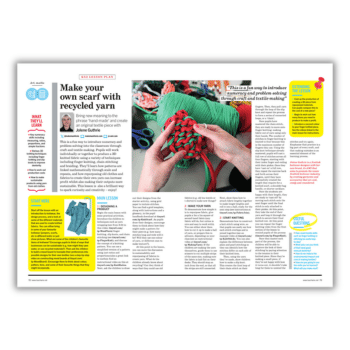



Bring new meaning to the phrase ‘hand-made’ and create an original knitwear piece with Jolene Guthri…
This is a fun way to introduce numeracy and problem-solving into the classroom through craft and textile-making.
Pupils will work individually or together to produce a 3D knitted fabric using a variety of techniques including finger knitting, chain stitching and braiding.
They’ll learn how patterns are linked mathematically through scale and repeats, and how repurposing old clothes and fabrics to create their own yarn can increase profit whilst also making their outputs more sustainable.
This lesson is also a brilliant way to spark curiosity and creativity – enjoy!
Learning objectives
- Practise key numeracy skills including measuring, ratios, proportions, and simple fractions
- Try various 3D knitting techniques, including finger knitting and slip knots to improve dexterity
- Work out production costs
- Make sustainable products using yarn from old clothes
Starter activity
Start off the lesson with an introduction to knitwear, the design process, and a look at some of the different materials that are used to create knitted fabrics.
You can either bring in some of your favourite knitwear (jumpers, scarfs, etc in different knits) or just show pictures. What are some of the children’s favourite items of knitwear?
Encourage pupils to think of ways that businesses can be sustainable (e.g. how might they save water, or use recycled materials?).
Then ask the children to build a mood board to translate their preferences into possible designs for their own textiles.
Encourage them to think about colour, pattern, tone, and some of their favourite things that they might incorporate.
Jolene Guthrie is a Scottish knitwear designer with her own brand, Jo-AMI, that aims to promote the iconic Scottish knitwear industry by creating garments and accessories that are cool, comfy and considered.