

We hear a lot these days about the things that schools ‘should’ be teaching children and young people.
Sometimes, these will be specific topics or subjects that don’t yet have a formal place within the National Curriculum, but arguably should. See financial education, for example – which, depending on how the government responds to the Curriculum and Assessment Review, may well be appearing in maths and PSHE schemes of work sooner rather than later.
And then there are those suggestions for areas that schools are, in fact, covering already, albeit perhaps not as comprehensively as they’d like to be. The prime example of which must surely be ‘critical thinking’.
Everyone wants to see school students given a solid grounding in critical thinking. Employers, parents, think tanks, charities, policymakers – they all want today’s students to become savvy navigators of the modern information landscape, able to swiftly distinguish between the real and the fake, and pick up on not just the detail of what they see and hear, but why they’re seeing and hearing it.
That’s a noble enough ambition, but one that appears increasingly at odds with the growing expectation that those same young people will be regularly interacting with generative AI technologies built around large language models.
“Will we need younger generations to approach the world in a perpetual state of forensic vigilance in order to get anything done?”
It’s one thing to confront an online information space populated by a succession of helpful, supportive, opinionated, spiteful and malign humans, where competing claims and counter claims must be carefully weighed up and interrogated. It’s quite another when the authorial voices of whichever Microsoft, Google, Meta, Amazon or Apple services you might be using confidently tell you things that are verifiably false.
Then again, perhaps that’s what’s driving all these urgent calls for students to be well-versed in critical thinking. With hallucinations and factual fever dreams an inevitable by-product of how modern AI systems function, will we need younger generations to approach the world in a perpetual state of forensic vigilance in order to get anything done and prevent the global economy from toppling over?
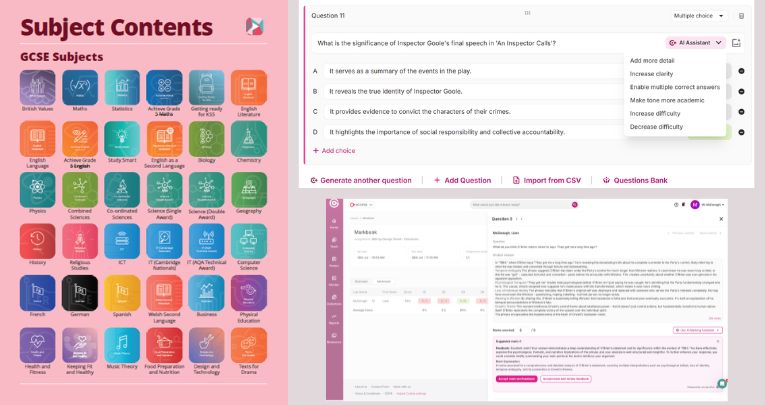
Call it pessimism if you wish, but those are the thoughts that will be at the back of my mind as Bett 2026 gets underway later this month (see p47 for our show preview). Once again, we can expect AI solutions to be taking centre stage, amid promises of swifter student assessments, elegantly streamlined admin and hugely valuable data insights that school leaders could never have accessed otherwise.
Which is all well and good. Because if the aim is to get students thinking for themselves, that’s something we can all get on board with. Where you lose me – and, I suspect most people – is when it looks as though the machines are being primed to do our thinking for us.
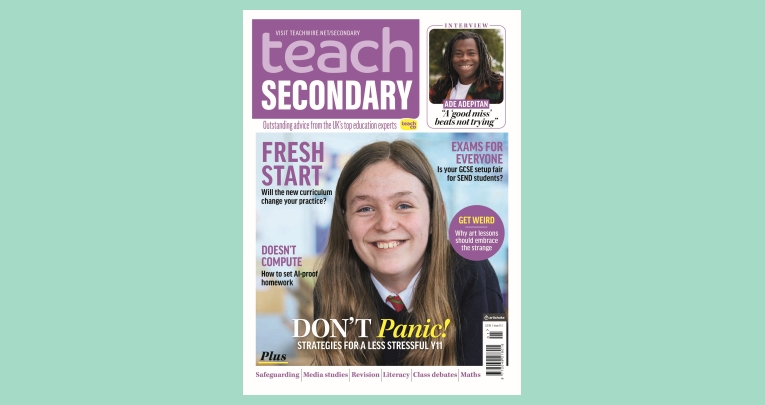
Enjoy the issue,
Callum Fauser – Editor
callum.fauser@theteachco.com