
Cadbury World offers a unique and engaging experience that connects modern life with the legacy of the ancient Maya civilisation, explains Ruth Astley…
As a passionate teacher of history, even I’ve found teaching the Maya civilisation a challenge.
The KS2 history curriculum specifically references “a non-European society that provides contrasts with British history,” with the Maya as a suggested focus. This supports objectives around understanding similarities and differences across societies and developing historical enquiry skills.
With their hard-to-imagine timeframes, unfamiliar cultures and distant locations, it can be difficult to make these people and their achievements seem tangible or relevant to children.
Maya civilisation, in particular, can feel hard to reach – both in geography and in daily life – from the world children know.
Yet, making ancient civilisations come alive is vital to fostering historical enquiry, empathy and understanding of global culture. Most importantly, it can create a love for one of the most exciting subjects in the curriculum!
Teaching the Maya civilisation
Teaching the Maya civilisation offers teachers a unique opportunity to enrich pupils’ understanding of world history and diversity.
The Maya were an advanced society whose achievements spanned mathematics, astronomy and art, not to mention chocolate production.
Exploring their rise and fall encourages critical thinking and historical enquiry, while their myths and legends capture children’s imaginations.
By studying Maya civilisation, pupils can gain a global perspective, develop analytical skills and make cross-curricular connections to subjects like geography and science. This topic brings so many positives to our history curriculum and children’s learning, including:
- Global perspective: Learning about the Maya introduces pupils to a non-European civilisation, broadening their understanding of world history and diversity.
- Critical skills: Exploring the rise and fall of the Maya encourages critical thinking, problem-solving and the analysis of sources.
- Cross-curricular links: Learning about Maya civilisation offer opportunities to delve into geography, maths (through their advanced numerical systems), art, science (such as astronomy) and even PE (through their interesting leisure activities, including the world’s first team sport).
- Engagement: The myths, legends and achievements of the Maya – from chocolate to pyramids – capture children’s imagination.
Visiting Cadbury World
While finding ways to teach the Maya civilisation is often a challenge for teachers, one innovative way to do it is through a school trip to Cadbury World.
At first glance, a chocolate attraction may seem an unlikely candidate for historical learning. However, Cadbury World offers a unique and engaging experience that connects modern life with the legacy of the ancient Maya.
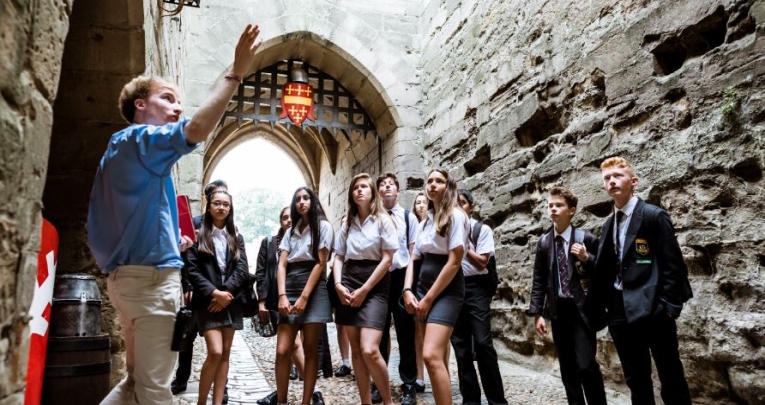
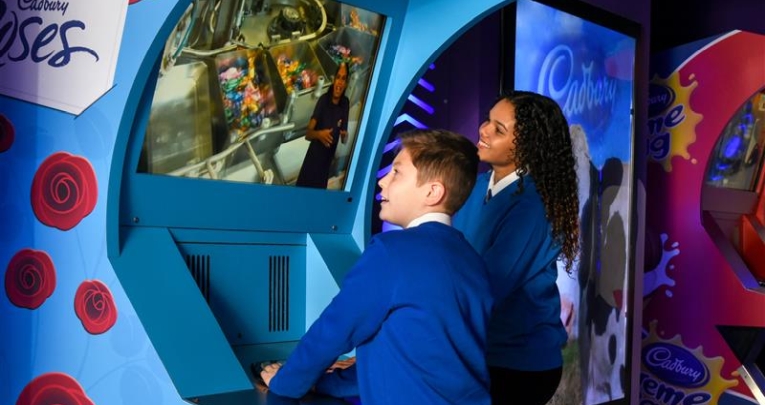
On a school trip to Cadbury World, children are captivated by a range of interactive and hands-on experiences that make learning both fun and memorable.
Children can follow the fascinating journey of chocolate from the rainforests of Central America – where the Maya first cultivated cacao – to modern-day Birmingham. They’ll draw direct connections between the ancient Maya civilisation and their own lives.
Hands-on activities
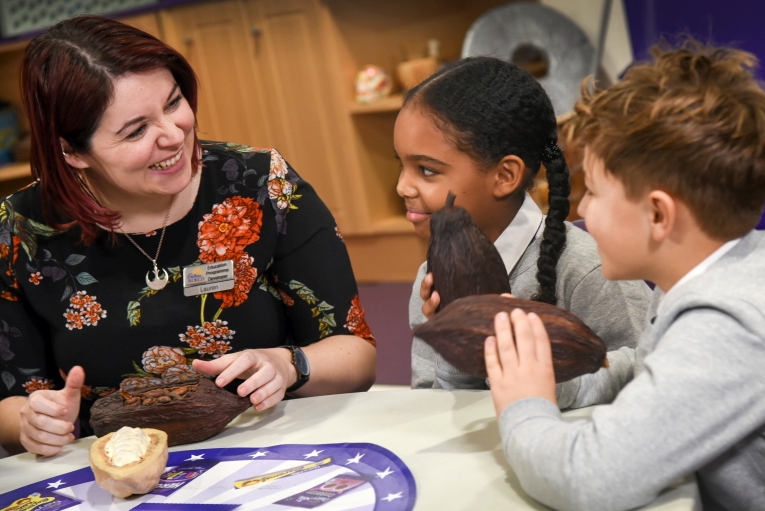
Engaging activities include handling real cacao pods, grinding cocoa beans and learning about and immersing themselves in chocolate manufacturing. These bring history to life through taste, touch and exploration.
The dedicated Mayan workshop immerses children in the myths, rituals and daily practices of the Maya, highlighting the sacred significance of chocolate and its role in their culture.
These experiences not only spark curiosity. They also help pupils see the Maya civilisation as a vibrant and innovative society, making the past feel immediate and relevant.
A visit to Cadbury World supports the KS2 history objective of studying a non-European society that provides contrast with British history. It also provides rich opportunities for cross-curricular learning, including:
- Geography: Mapping the journey of chocolate and exploring the environments where the Maya lived.
- Science: Understanding plants, food production and the properties of materials through the chocolate-making process.
- PSHE and citizenship: Exploring fair trade, cultural appreciation and the global significance of chocolate today.
By linking classroom learning about the Maya civilisation to real-world experiences, like those offered at Cadbury World, teachers can make the ancient past feel immediate, relevant and exciting.
Such trips not only deepen historical understanding but also ignite curiosity, providing a springboard for further enquiry and appreciation of our global heritage. For teachers seeking to inspire their pupils and fulfil the national curriculum, Cadbury World offers a surprising way to make history come alive.
Ruth Astley is a freelance educational writer and former assistant head and SLE.