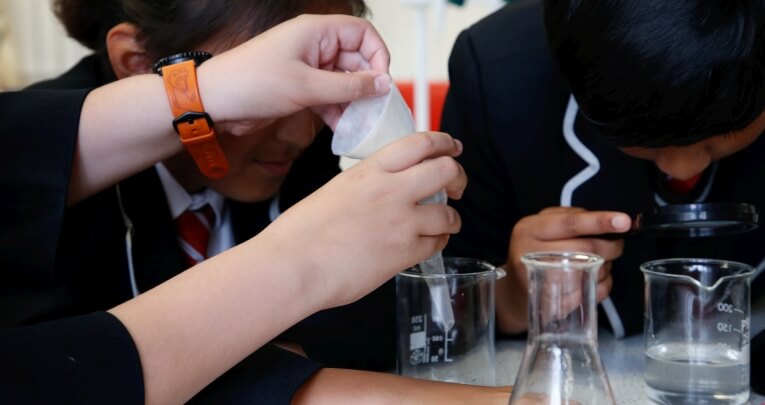


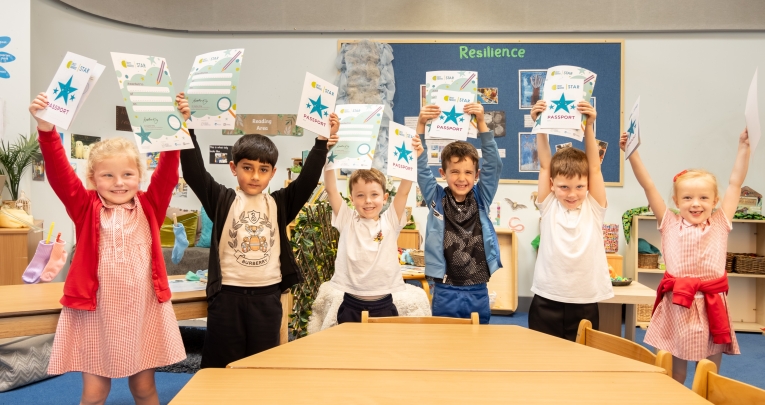
CREST is the British Science Association’s education programme that brings science, technology, engineering, and maths (STEM) to life for young people aged 3–19 of all abilities. Participating students engage in hands-on activities and exciting projects, earning nationally recognised CREST Awards that mark their achievements.
1. CREST can help boost scientific vocabulary
Each primary CREST challenge places an emphasis on children expanding their scientific vocabulary, which can help them to actively participate in future science learning and effectively communicate their understanding.
Activities include a ‘Key words’ section, with a list of scientific words related to the topic, some that children may already be familiar with, and some they may be hearing for the first time. For example, in the SuperStar activity ‘Drifting Dandelions’, designed for pupils typically aged 7–11, the key words are seed, germination, pollination, plants and dispersion.
2. CREST encourages pupils to explain their thinking, whether verbally or in written form
Strategies that encourage pupils to make their thinking explicit can create opportunities for them to recall, organise, and express their thoughts – and think scientifically.
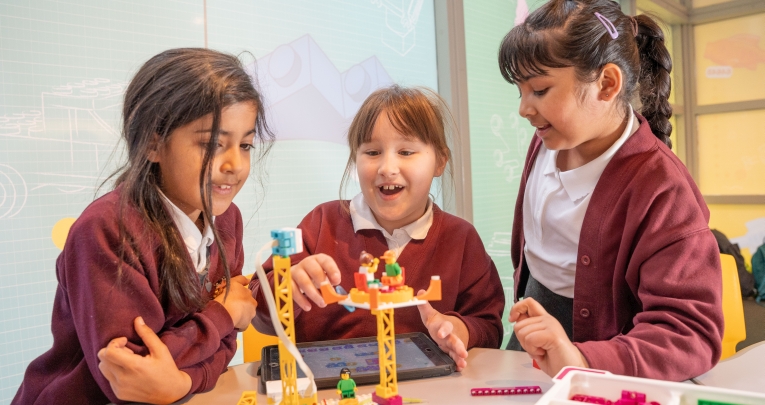
All primary CREST challenges (Star and SuperStar level) encourage children to work collaboratively, and to share their thoughts and ideas either verbally or in writing. There is no right or wrong way to do it – children can be creative – and it encourages them to think about what they’ve done and why.
“Primary CREST challenges are relevant to the lives and interests of young children.”
3. CREST guides pupils to work scientifically
All CREST challenges put the children in the role of ‘scientist’ or ‘engineer’, which encourages them to think about what they’re doing – what are they trying to find out through their experiment? – rather than simply going through the motions.
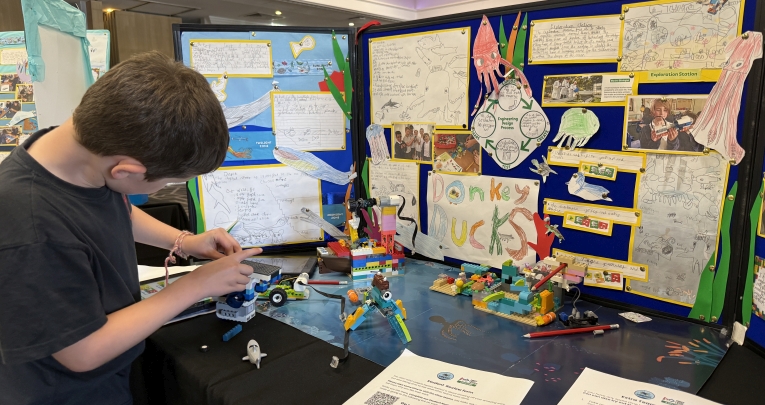
Working scientifically grants the children some independence; they can think about designing their own experiments and creatively presenting the results. Primary CREST challenges are purposefully open-ended to support children to think like scientists answering a question about the world.
4. CREST relates new learning to relevant, real-world contexts
Connecting science teaching to meaningful, tangible examples can enhance attainment and attitudes towards the subject.
Primary CREST challenges are relevant to the lives and interests of young children. Each activity discusses a real-world scenario, demonstrating the link between science lessons in the classroom and the children’s lives.
For example, ‘Speedy Scooters’ in the Star collection (suitable for 3–7-year-olds) teaches children about surfaces and friction by asking why you might go faster riding a scooter on a smooth path than on grass.
5. Use assessment to support learning and responsive teaching
Successfully completing a CREST challenge involves trial and improvement. The open-ended experiments allow for teacher feedback during the process.
Once a child has completed six primary activities, they can apply for their CREST Award certificate, which gives children a sense of achievement and pride in their science abilities. Establishing a child’s positive attitude towards science is vital as it can provide a foundation for further engagement.
- CREST challenges are designed for children starting from age 3 – there are resources specifically designed for use for early years learning.
- Children who earn CREST Awards receive high-quality certificates which can be given out at an assembly. There is a fee of just £1 per pupil.
- The CREST Resource Library is full of primary resources, which are free to access. Alternatively, you can also design your own activities.
- CREST promotes equal participation across the genders; research has shown that of those who take part, 49.5% are boys, 50.2% are girls, 0.3% other.