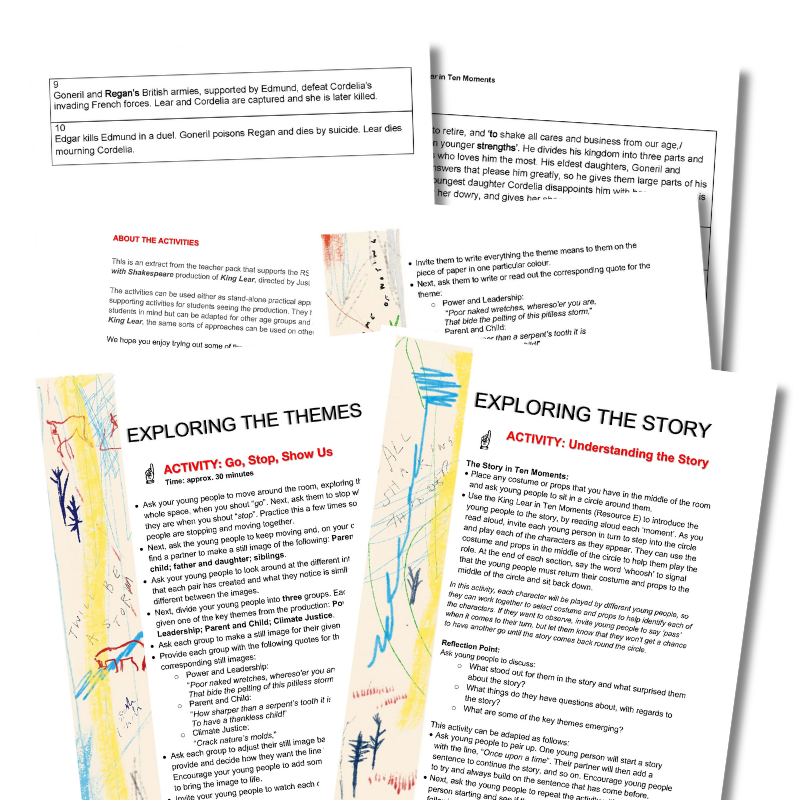



These lesson ideas from the RSC demonstrate how you can teach Shakespeare to primary pupils using an active, rehearsal-based approach…
The RSC approach to teaching Shakespeare
Over the years, we’ve trained thousands of teachers to bring to the classroom the sorts of approaches our actors and directors use in the rehearsal room.
During active, rehearsal-based approaches to Shakespeare in the classroom, desks are pushed to one side, and the plays are explored through movement, spoken word and shared interpretation.
When exploring the key themes and dilemmas that are present in the text, rehearsal room approaches focus on:
- establishing the world in which the story is taking place
- telling the story
- discovering the characters
- exploring the language
This approach is active, fun and works with learners of all ages and abilities. By embodying the language, pupils engage emotionally, physically and intellectually, deepening the learning and making recall easier.
The facts don’t lie
Our 2024 Time to Act study used a randomised controlled trial in 45 state primary schools and demonstrated just how transformative this approach can be.
In the trial, half of the Year 5 classes were taught using RSC rehearsal-based methods; half followed their usual curriculum. After just 20 hours of teaching, all the children completed the same two writing tasks: one creative and one persuasive.
Significantly, children taught using RSC methods outperformed their peers in 41 of 42 of the established measures researchers used to evaluate the writing. During the trial they developed richer vocabularies, sharper comprehension skills and greater confidence using complex language.
Importantly, we observed these benefits across the board. In the test classrooms, ability wasn’t the deciding factor, it was the approach that was the key.
A playful way to learn
Active, rehearsal-based approaches do more than enliven lessons. They connect with children’s natural instinct for storytelling and play. The combination of a compelling plot and active collaborative exploration turns potential barriers into invitations. It encourages young people to explore something new, experiment with language, debate ideas and work together.
Teachers regularly report huge gains in writing attainment. After working with the RSC and using our teaching approaches, some schools moved from well below the national average to over 90 per cent of children meeting standards in reading and writing.
To find out more about the First Encounters: King Lear tour and download additional lesson ideas, visit rsc.org.uk/first-encounters-king-lear