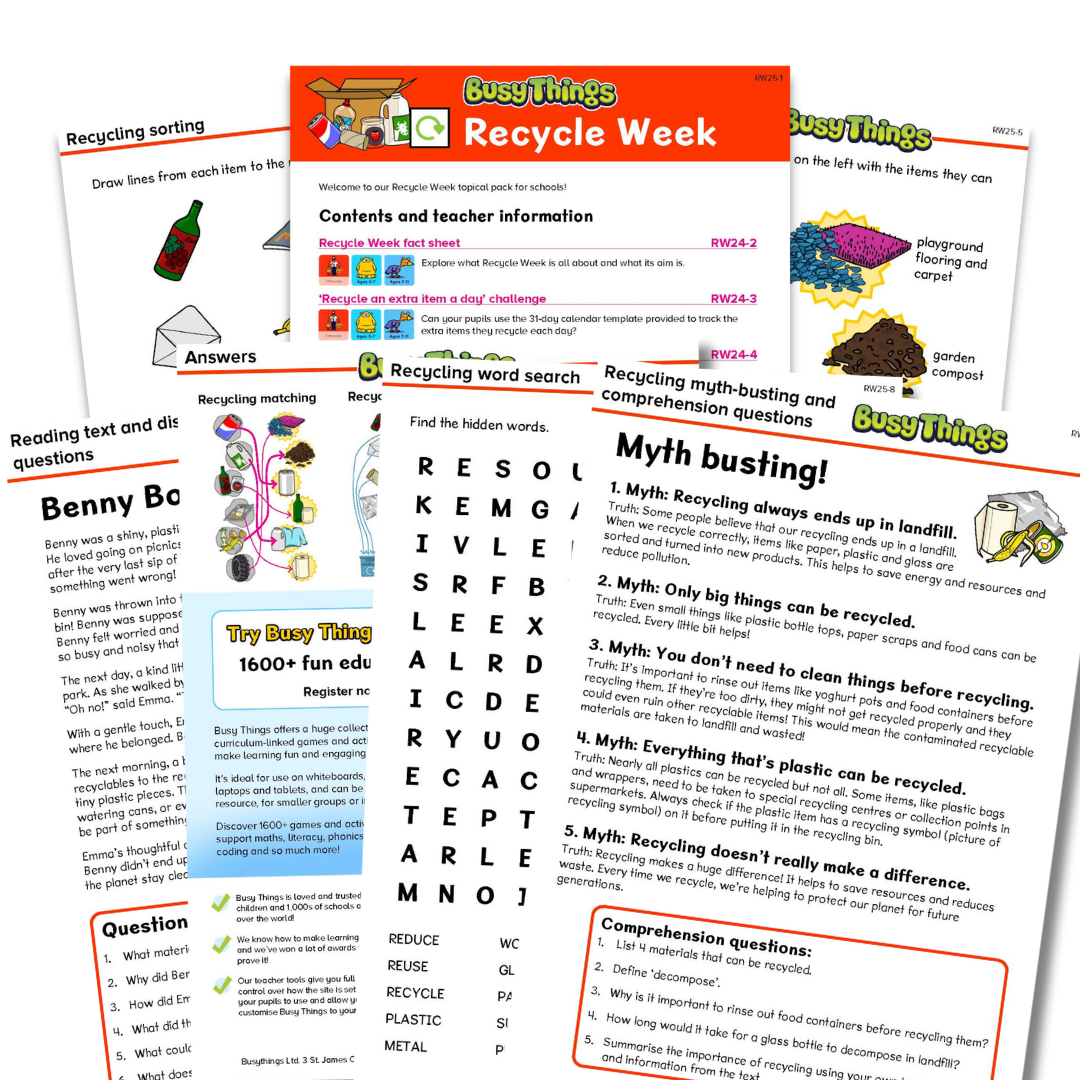


Engage your pupils with practical, curriculum-linked activities that highlight the importance of recycling. Busy Things’ Recycle Week Resource Pack is packed with interactive, ready-to-use materials designed for primary schools.
Inside, you’ll find:
- Fact sheets and myth-busters to spark discussions and tackle common misconceptions about recycling.
- A ‘Recycle an extra item a day’ challenge with a pupil calendar for tracking recycling habits across the month.
- Sorting and matching games that help children identify recyclable materials and understand what they can become.
- A heartwarming story, Benny Bottle’s Second Chance, with guided questions to encourage empathy and deeper thinking.
- Puzzles, word searches and creative writing prompts to reinforce recycling vocabulary and embed key learning.
By weaving these activities into your lessons, assemblies or Eco-Council projects, you’ll not only boost children’s recycling knowledge but also empower them to make a tangible difference. With resources aligned to the KS1 and KS2 curriculum, this pack can make Recycle Week a hands-on, engaging experience for the whole school.
What is Recycle Week?
Recycle Week 2025 takes place between 22nd and 28th September and aims to motivate more people to recycle more of the right things, more often. It’s an annual event, run by Recycle Now, the national recycling campaign for England and Northern Ireland.
Now in its 22nd year, Recycle Week was established to raise awareness of recycling and its benefits and make recycling second nature to us. It aims to get more people to recycle correctly and more frequently.
What are the benefits of recycling?
Recycling is the process of turning old items into new products instead of throwing them away. This helps save resources and reduce waste.
Using recycled materials to create new products reduces energy consumption and pollution produced from extracting new resources (e.g. via mining, quarrying, and logging), therefore creating a healthier planet for ourselves and future generations. For example, making an aluminium drink can from recycled material uses 95% less energy than making a new one.
If not recycled, recyclable materials will end up in a landfill. This is problematic because many of these materials don’t decompose quickly. According to BBC Science, glass bottles take a million years to decompose, plastic bottles 450 years and plastic bags between 200 and 500 years!
Also, if we throw them away, we’ll replace them with products made from new resources – resources that take energy to mine and process, that produce chemicals in their production and that are depleting fast!
Busy Things offers a huge collection of interactive, curriculum-linked games and activities. Discover 1600+ games and activities to develop and support maths, literacy, phonics, science, art, music, coding and more.