


Peer inside the mind of author Clare Harlow and help pupils understand how flashbacks can help to set up mystery stories with this WAGOLL based on Tidemagic: Ista Flit and the Impossible Key.
There are different ways of setting up mystery stories: authors may explain the details and the situation thoroughly, or they may shroud the set-up in a further atmosphere of mystery. This makes readers infer and deduce what’s happening from clues. It also helps them experience both the secrecy and unreality alongside the main characters.
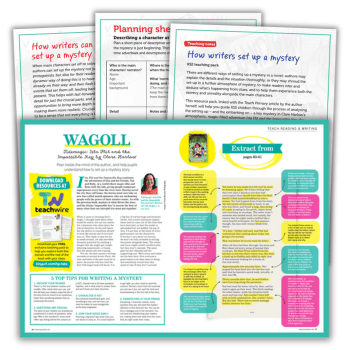
This resource pack will help you guide KS2 children through the process of analysing the setting up – and the embarking on – a key mystery in Clare Harlow’s atmospheric, magic-filled adventure Ista Flit and the Impossible Key. They’ll select the techniques they will borrow to set up mystery stories of their own.
Use the extract to teach the development of a mysterious atmosphere, and the use of tenses to create flashbacks.
What’s included?
- Extract from Ista Flit and the Impossible Key by Clare Harlow
- ‘How writers can set up a mystery’ poster
- ‘Exploring writers’ techniques’ worksheet
- ‘Exploring writers’ techniques’ working wall display
- Location and messenger ideas
- Planning sheet
Five tips for writing mystery stories
Tidemagic author Clare Harlow offers her advice…
Anchor your reader
There’s a fine line between mystery and muddle. Offer clarity when you can, and this will help your readers enjoy the bits of the story that are meant to be mysterious, rather than wondering whether they’ve understood the basics.
Questions are crucial in mystery stories
The spine of your mystery can probably be condensed to a series of questions; some big (‘Who is the murderer?), some small (‘Who was hiding behind the curtains on p.55?’). Decide how to fit these questions together, and in what order to answer them, and you’ll have your basic structure.
Character is key
Give everyone something to gain, and something to lose, and see if you can raise the stakes for your protagonists as the story progresses.
Sow your seeds early
Planning a big twist? See what clues you can weave in early on. It’s a hard balance to get right; you don’t want to spoil the surprise.
Reread mystery stories that have surprised you and see if you can spot the hints and foreshadowing in the first half of the story.
Signposting is your friend
Everything a character notices, every question they ask, will point the readers’ attention in that direction too. You can do this in the dialogue and the narrative.
You can have fun misdirecting your readers, too, making them look away from the clues that are right under their noses
Thank you to Lindsay Pickton for creating the resource pack. Browse more WAGOLL packs from real authors.
Similar resources
- Dragonborn – Write a big transition scene
- Teaching Dickens – Creative exercises to try in primary
- A Girl’s Guide to Spying – KS2 WW1 book topic
- Poetry prompts with Joseph Coelho – Author In Your Classroom ep 29
- Bring mythology into the modern world with Louie Stowell – Author In Your Classroom ep 28