
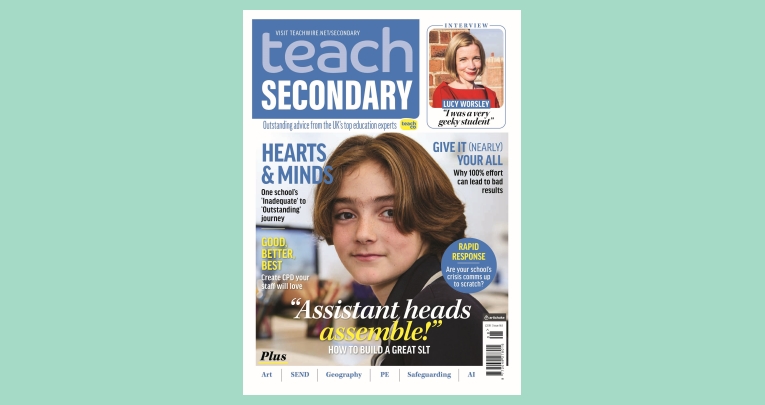
At last, it’s here. On November 5th 2025, the independent review of England’s curriculum, assessment and qualifications system overseen by Professor Becky Francis published its final report.
Many across the profession were awaiting its contents with keen interest, and for good reason. The government’s official response seems to suggest that review’s recommendations will be adopted in full – which, as noted in this issue’s news section, will include a higher status for arts subjects, a new core enrichment entitlement and students taking triple science GCSE as standard.
Those proposals go some way towards addressing concerns that secondary educators have expressed for some time – but it’s arguably the review’s recommendations for KS1/2 that give the clearest indication of a philosophical shift having taken place.
See how, for example, the report baldly states that the primary English Programmes of Study should, “Include a stronger focus on using and applying grammar rather than on identifying theoretical constructs by name, which is not developmentally appropriate or meaningful.” That’s a pointed rejection of whatever remains of Michael Gove’s educational legacy if ever I saw it.
And thus, the pendulum swings back. Arts specialists will be celebrating and writing out their shopping lists. Site managers will be telling excited history teachers which rooms they can use for their after-school wargaming club. Science teachers will be cautiously appraising their inventories.
“I can’t help wondering if this is the start of another 14-year curriculum stretch, or whether things will change again sooner rather than later.”
However, it’s worth considering the timeframes involved here. The last comparable overhaul of what schools must teach took place under the then coalition government, which set out its own National Curriculum plans in October 2013, and had them come into force from September 2014.
Here in the present day, we’ve been told to expect Labour’s final curriculum to arrive in spring 2027, and schools to start teaching it from September 2028. At that point, there’ll be another General Election due before the academic year is out, if we haven’t already had one by then.
I’m again reminded of how Finland’s Education Agency operates largely outside of direct party political influence, setting a broad outline for the country’s National Curriculum which then serves as a basis for the curriculums adopted by different municipalities and/or schools.
Given where we currently are, and the prevailing chatter regarding the prospects of certain UK parties come election time (mentioning no names here, but Melissa Benn has some thoughts on that over on page 17), I can’t help wondering if this is the start of another 14-year curriculum stretch, or whether things will dramatically change again sooner rather than later…
Enjoy the issue,
Callum Fauser – Editor
callum.fauser@theteachco.com